
A beautiful photograph doesn’t automatically become a sustainable photography business. The business skills photographers need matter alongside an artistic vision and strong technical skills, because creative ability alone doesn’t build a reliable livelihood.
You can master camera operation, chase great light, and build a strong portfolio, then still find yourself stuck because the business side never got the same attention.
The good news is that this isn’t about becoming a pushy marketer or turning your work into something it isn’t. It’s about building the practical skills that help your photography support you for the long haul, with this article serving as a starting point rather than a rigid business plan.
Start with the part most creatives avoid: money.
Key Takeaways
- Strong photography skills alone don’t create a sustainable business; financial management, marketing, and consistent action matter just as much.
- Price your work based on the full cost of your time, equipment, production, and experience, then track income and expenses regularly.
- Build an online presence that helps the right people find and trust your work through a clear website, useful content, social media, and genuine relationships.
- Replace perfectionism with simple systems and scheduled actions that keep your business moving, even when motivation disappears.
- Writing is a valuable business skill that helps photographers build trust, explain their work, improve marketing, and make effective pitches.
Financial Management Starts With Honest Pricing
Running a photography business isn’t about taking great photographs and hoping money follows. You need to understand sales and pricing, what the work costs, and whether each sale is worth your time.
I learned this the hard way. When I first put landscape prints online, I sold framed prints for about $400 and unframed prints for around $300. That sounded fine on the surface.
But printing and framing each order took at least two hours. Shipping inside Norway cost roughly $20 to $30. Then there was the time in the field, often multiple long trips that produced no usable photograph at all. I sold a few prints, but barely any profit remained after accounting for the full effort.
Posting photos and hoping someone buys is not a business system.

Price for the work, not what feels fair
Pricing is one of the hardest things to get right. Charge too little, and you may attract clients at first, but you’ll be overworked and underpaid. Charge too much without understanding your value or your market, and you can scare away the people you want to work with.
Start with the actual costs:
- Equipment, insurance, travel, editing software, and printing.
- The time spent planning, shooting, editing, communicating, packing, and delivering.
- A profit margin that supports your goals, not one that lets you scrape by.
Then consider pricing and licensing. A print’s production cost matters, but so does how an image may be licensed or used.
Look at what other photographers in your market charge. Don’t copy their prices. Use them to understand where you fit and how you want to position your work.
Time management matters here, too. Labor, turnaround time, and rushed deadlines all belong in your rate calculation.
Clear quotes and expectations make client communication easier. They also help you respond to inquiries with confidence.
People aren’t only paying for a photograph. They are paying for your experience, your eye, your time, and what it took to get the image.
Basic legal knowledge also helps protect the business. Use appropriate written terms for contracts and copyright.
Price with confidence, and be ready to explain the value behind your rates.
Track what comes in and what goes out
You can’t manage what you don’t measure. Yet it’s easy to lose track once money starts coming in, especially when receipts are scattered around and your bank statement becomes the only record of what happened.
Trying to sort out vague expenses during tax season is stressful. It can also get risky.
Use a simple accounting tool such as QuickBooks or Wave to track income, expenses, and money set aside for taxes. The system doesn’t need to be complicated. It needs to give you a clear picture of the business.
When your numbers are organized, patterns start showing up. Review your budget and expenses to see when income drops, whether travel costs too much, or gear purchases are getting out of hand.
Record income as it arrives. Keep receipts. Track business purchases. Set aside tax money. Review the numbers regularly.
Those habits save time and headaches later.
Build a cushion for quiet months
Photography income moves around. Some months are busy. Other months are crickets.
That doesn’t mean you’re doing anything wrong. It means you need a buffer before a slow period turns into panic.
Aim to save three to six months of business expenses. That can include website hosting, subscriptions, and part of your rent or mortgage if photography is your main income.
If that number feels impossible right now, start smaller. Set aside a percentage from every payment. It adds up over time.
An emergency fund is insurance for the business. It also gives you room to focus on growing instead of worrying about the next bill.
Marketing Helps the Right People Find Your Work
Great work hidden in a folder doesn’t create opportunities. You need people to find it, understand it, and know why they should care.
Marketing doesn’t have to be shameless self-promotion. It’s showing people why your work matters and building real connections around it.
I spent 25 years in sales and marketing for medical diagnostics. For the final 12 of those years, I worked with distributors across Southeast Asia and India. We didn’t hand them a product and hope for the best. We trained them, followed up, and supported what happened after the sale.
Then I started posting photography online and did the least strategic thing possible. I uploaded image after image and waited for print orders.
A lot of photographers do the same thing. The photograph gets attention, but there is no real marketing strategy leading from discovery to trust, and from trust to a sale or inquiry.
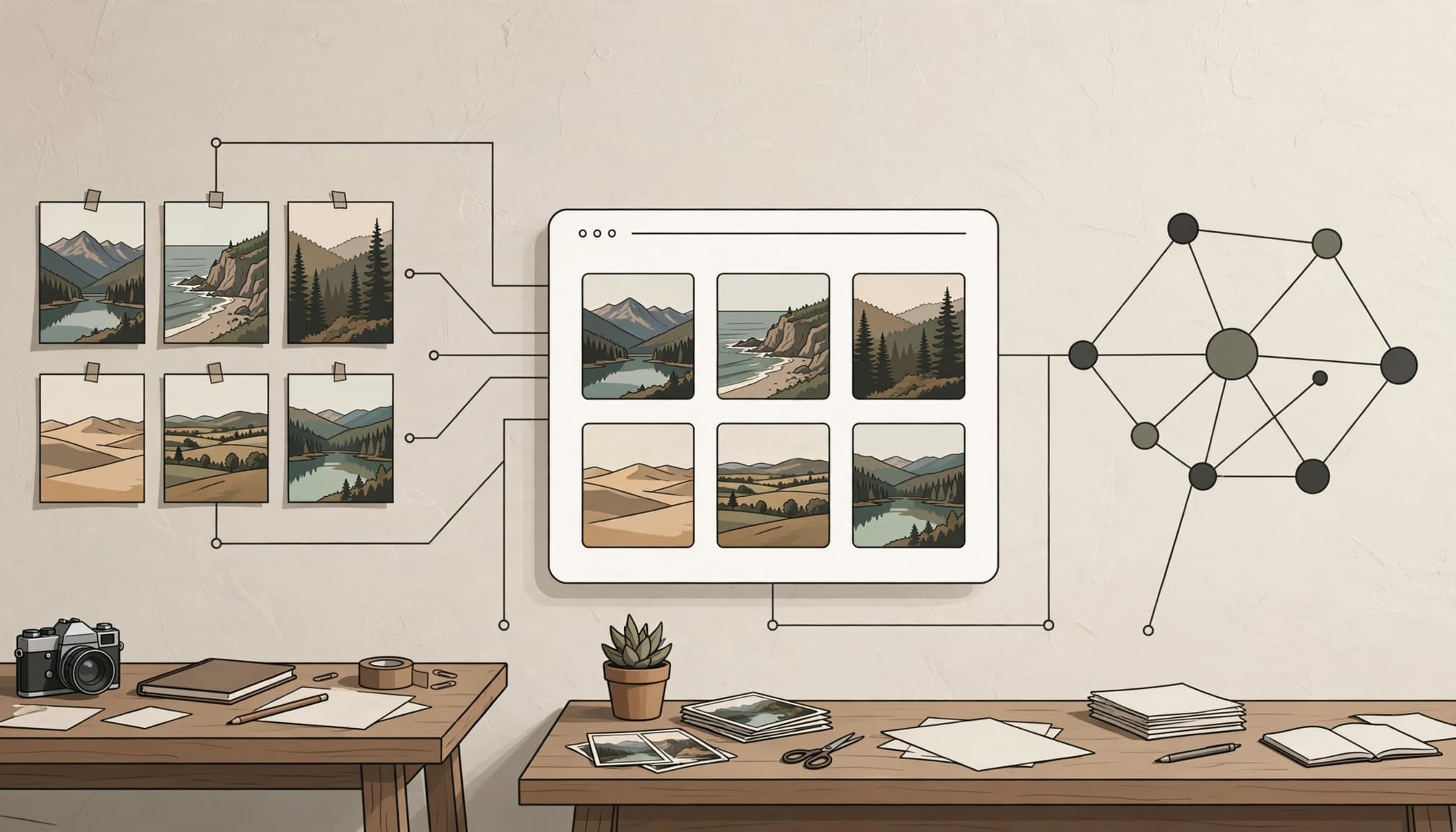
Build a website that feels like your work
Your website is your home base. Together with your portfolio and supporting channels, it creates your online presence.
Social media profiles matter, but they aren’t enough on their own.
A professional website should include your portfolio, contact details, and a blog or gallery where you can keep sharing work. It should also look and feel like the kind of photography you make.
Choosing, organizing, and presenting your images is ongoing portfolio development. Your site should make that work easy for visitors to explore.
If you photograph calm, minimalist scenes, your site should have that same feeling. If you want to work with tourism boards, galleries, collectors, or private clients, your pages need to speak clearly to your target audience.
People may search for things like “landscape photographer near me” or “fine art mountain photography.” The same principles apply to portrait photography and other specialties. Search engine optimization helps your site show up when people are already looking.
Google’s Keyword Planner guide can help you find local and niche search terms. Use those terms naturally in page titles, portfolio descriptions, blog posts, and website copy.
SEO isn’t stuffing a page full of keywords. It’s using the words your potential clients already use when they search.
Use Instagram and Pinterest differently
Instagram is a strong place to show the work and build trust. Social media marketing works best when you post your best images consistently, without stopping at the finished photo.
Share behind-the-scenes stories. Show parts of the process. Use relevant hashtags so new people can find you. Reply to comments, direct messages, and inquiries as part of good client communication.
Authentic interaction matters. It shows people there is a real person behind the photographs. Trust grows through those small exchanges, and trust can lead to clients.
Your website and social channels should help the right people find you, while helping you find clients.
Pinterest works differently. Think of it less like a normal social platform and more like an image search engine. Pins can keep sending people to your site long after you post them.
Add descriptive titles and keyword-focused alt text to your images. Link every pin back to the relevant page on your website or portfolio. Then keep pinning regularly.
A good pin can do more than collect likes. It can keep bringing the right people back to your work.
Build relationships with other professionals
Networking isn’t about awkwardly working a room or handing out business cards to everyone you meet. It’s about real relationships with people who can help you grow, and people you can help too.
For a landscape photographer, that might mean connecting with event planners, tourism boards, galleries, local photography clubs, workshop groups, or community organizations.
Other photographers can become part of that network too. They aren’t only competition. They may pass clients your way when they are booked, recommend you for a publication or gallery opportunity, or collaborate with you on a larger project.
You don’t have to wait for an in-person event. Comment on another photographer’s work. Send a quick message when something stands out. Share their work when it fits your audience.
Genuine relationships create networking and referrals over time. One good connection can open a door you didn’t know existed.
Action Taking Turns Plans Into Progress
A business plan is useful. A business plan you never turn into visible, scheduled actions is useless.
Photography businesses don’t stall because people lack ideas. They stall because photographers keep waiting for a better moment, a better website, a better portfolio, or more confidence before they put something into the world.
I know that one well. I carried the idea for this business for around ten years. I collected topics, studied online marketing, filled notebooks, made idea dumps, and thought about the project endlessly.
What I didn’t do was build a consistent public feedback loop.
Stored ideas don’t become a business until real people can see them, respond to them, and tell you what matters.

Stop waiting for perfect conditions
Perfectionism can keep you busy without moving you forward. You tweak the website again. You compare your work to someone else’s. You wait for the right conditions to launch a project.
But nothing will ever feel fully ready.
Publish the portfolio you’ve been adjusting for weeks. Send the email to a potential collaborator, even if it feels awkward. Share the behind-the-scenes photo without spending an hour rewriting the caption.
You can improve later. You cannot improve something you never publish.
Perfection is the enemy of progress. Small, imperfect actions create the momentum that leads to bigger opportunities.
Ask yourself: What’s one thing I can do right now to move forward?
Then do it.
Use systems when motivation disappears
Taking action isn’t one big leap. It’s showing up regularly, especially on the days when motivation has gone missing.
Systems make that easier. Break a bigger goal into smaller tasks and give those tasks a place in your week.
That kind of time management removes the need to decide what to do from scratch every day. If you want to find clients, break that goal into outreach, follow-up, and portfolio tasks.
For more print sales, you could contact galleries on Mondays, showcase new prints online on Wednesdays, and follow up with potential buyers on Fridays.
A basic to-do list app can work. Trello can work too. The tool matters less than having a clear way to separate what needs attention today from what can wait.
Consistency builds trust with clients and collaborators. More importantly, it builds trust with yourself.
Take the risk, learn, and adjust
Action often feels uncomfortable. You may need to pitch your work to someone outside your usual circle, pay for a workshop you aren’t sure you deserve to attend, or ask a mentor for help.
That’s part of it.
Failure isn’t the opposite of success. It’s part of the process. Every action gives you one of two things: a win or a lesson.
Instead of asking, “What if I fail?” ask, “What’s the worst that happens if I try?”
The answer is usually less dramatic than your brain makes it out to be. And if something doesn’t work, you have feedback. Adjust and move forward.
Say yes to the right opportunities
Taking action doesn’t mean saying yes to everything. In the early days, every collaboration or job can feel like something you should grab.
That can lead to burnout. It can also pull you away from the work that matters most.
Before you say yes, ask:
- Does this fit the direction I want for my business?
- Will it improve my skills or portfolio?
- Is there a clear return, whether that is money, exposure, or experience?
Not every useful opportunity pays immediately. But it should have a clear purpose.
Saying no sometimes gives you room to say yes to better things.
The Business Skill Photographers Don’t Expect: Writing
Most photographers don’t put writing near the top of their skill list. It should be higher.
Your photos can communicate an artistic vision, but words give people the context. They explain why you were there, what pulled you toward a scene, and what technical skills helped create the image.
Writing helps you connect with people, build trust, market your work, and pitch opportunities. It works alongside your photographs. It doesn’t compete with them.

Tell people what happened behind the photograph
A misty mountain photograph can stop someone scrolling. But why did that photograph matter to you?
Maybe it was the solitude. Maybe you hiked 10 miles before sunrise. Maybe the weather fought you all morning. Maybe the image came after several failed attempts.
That context gives the image more weight. It makes people feel part of the experience instead of only looking at the final frame.
Use writing in social captions, blog posts, and the About page on your website. You don’t need to write a novel under every image. Tell people something real.
A useful prompt is simple: What drew me to this scene, and what did it take to photograph it?
You might explain the camera operation, lighting techniques, composition and design, or post processing behind the finished image. Those details can reveal the creative photography choices that shaped the story.
Photography is often about more than technical perfection. I see that on expedition trips all the time.
After each expedition, I create a slideshow using photographs and video from the journey. Guests sometimes come up afterward with tears in their eyes because it brought the experience back for them. Others immediately want to know which camera and lens I used, or which editing software helped finish the images.
Both responses matter. The emotional connection and the technical curiosity can exist in the same audience.
Write like someone people can trust
Clear writing affects how clients see you.
When someone emails about a print, reads your pricing guide, opens a contract, or sends a message on Instagram, your client communication is part of the experience. Clear, professional writing makes you look organized and reliable.
Sloppy writing can hurt that trust, even if your photographs are excellent. Typos, unclear sentences, and confusing responses make people wonder whether the rest of the process will be messy too.
Before sending something important, check that the writing is clear, the spelling is clean, and the next step is easy to understand.
Every written interaction is a chance to show people you take the business seriously.
Let writing do the sales work your photos can’t
Photographs get attention. Words often help someone decide what to do next.
Captions, blog posts, newsletters, website copy, and social media bios all shape how people understand your work and what you offer. Good writing helps people stay interested long enough to book you, buy a print, join a workshop, or follow your work more closely.
Blogging can also help people find you online. Share stories from the field. Explain how you shot an image. Write about editing decisions or low-light photography. Use relevant search terms naturally where they fit.
Useful content can establish you as someone worth learning from. It can also create other ways to earn, such as presets, workshops, or courses.
The important part is that you are giving people more than an image. You are giving them a way to understand your experience.
Write pitches that don’t sound copied and pasted
Sooner or later, you may need to pitch a gallery, tourism board, publication, or brand partner.
Keep the message concise. Say who you are, what you are offering, and why it matters to the person receiving it.
A five-paragraph email that circles the point usually won’t get read. A generic copy-and-paste pitch won’t make much of an impression either.
Do your homework. Tailor the message to the recipient. This saves time management headaches by reducing unnecessary back-and-forth.
Show that you understand what they do and why the partnership could make sense.
The goal isn’t to sound salesy. The goal is to make the value of working together clear.
Frequently Asked Questions
What business skills do photographers need most?
Photographers need financial management, marketing, and action-taking skills to build a sustainable business. Writing is also important because it helps explain the value and context behind the work.
How should photographers price their work?
Start by calculating the full cost of equipment, travel, production, editing, communication, and delivery. Add a profit margin that supports your goals, then consider your market, experience, and how the work will be used or licensed.
Why is marketing important for photographers?
Marketing helps the right people find your work, understand what you offer, and build enough trust to make an inquiry or purchase. A professional website, consistent social media, search engine optimization, and genuine networking can all support that process.
How can photographers take more consistent action?
Break larger goals into smaller tasks and schedule them during the week. Simple systems, such as regular outreach, portfolio updates, and follow-ups, reduce the need to rely on motivation.
Why does writing matter in a photography business?
Writing adds context to photographs and helps people understand your experience, creative choices, and services. Clear captions, website copy, pitches, and client communication also make you appear more professional and trustworthy.
Build the Business Around More Than the Photograph
Financial management gives you a foundation. Marketing helps people find your work. Action-taking gets the work out of your head and into the real world. As a professional photographer and small business owner, writing helps you explain why your work matters.
The bigger point is simple: business skills are learned, from sales and pricing to systems that keep moving when motivation drops. A sustainable photography business takes more than strong images, and those skills should support your artistic vision.
You don’t need to fix everything at once. Pick the area that has been holding you back, then make it part of a simple business plan.