If you make one offer, get no sales, and decide people don’t [...]
Photography marketing

Photography marketing
If you make one offer, get no sales, and decide people don’t [...]
Photography business
Selling photography prints isn’t your problem. Building your whole business around them [...]
Photography business
A beautiful photograph doesn't automatically become a sustainable photography business. The business [...]
Photography business
You can be highly skilled at landscape photography and still make no [...]
Photography marketing
You can complete three Instagram posts, one reel, a YouTube video, and [...]
Social media
Landscape, travel, and wildlife photographers share beautiful landscape photography every day, then [...]
Selling photography prints isn’t your problem. Building your whole business around them is.
As an independent artist, you can post great images, collect likes, and hear “your work is beautiful” all week long without making consistent income. That doesn’t mean your photography isn’t good enough. It means attention isn’t the same as demand.
Here’s where most landscape, travel, and wildlife photographers get stuck.
The plan sounds reasonable at first.
You make strong images. You post them online. You build an audience over time. And somewhere in the background sits the idea: “Eventually, I’ll sell prints.”
Then the likes arrive. Other photographers praise the work. People tell you they love your images.
But the print sales don’t follow.
The hard part is that much of that engagement may come from other photographers. They can admire the image, understand the work behind it, and still have zero interest in buying a print for their wall.
Your audience may appreciate your work without being actual art buyers.
When print orders don’t happen, the usual response is to push harder.
Post more often. Make better images. Open a new print shop. Change the website.
Offering more affordable prints or uploading daily won’t overcome market oversaturation if you’re pitching to people who simply aren’t looking to buy decor. The issue may not be your photography. It may be the business model built around it.
A like shows appreciation. It doesn’t prove someone wants to spend money on a print.
Most decor prints are a nice-to-have. They decorate a wall, but usually don’t solve an urgent problem.
Outside the traditional fine art print market, high-end art galleries and dedicated art collectors set a different standard. Supporting a living artist solely through prints is mathematically challenging.
Original works of art and artisanal hand-pulled prints offer physical uniqueness. Modern mechanical prints and giclee reproductions can have excellent print quality, but they don’t provide the same tangible scarcity collectors seek.
Limited editions can signal scarcity through documented edition numbers and an artist signature. Open editions have no fixed limit, so their supply and demand rarely support collector-level pricing.
Compare that with an offer that helps someone improve a skill, make better photographs, or create something they care about. The perceived value is different.
That’s why someone can pay more for a course than for a print without questioning it. The course feels like progress. The print feels optional.
Prints are expensive to produce, hard to scale, and easy for a customer to ignore.
Even when printing is outsourced, the money gets eaten up by production, shipping, and platform fees. The remaining sales margin can be very thin. Then many photographers underprice because they’re worried that nobody will buy at a higher price.
That puts you in a bad position:
Low demand + thin margins = frustration.
I learned this the expensive way. On my first photography website in 2008, I posted image after image and hoped people would buy prints. Framed prints sold for around $400. Unframed prints sold for around $300.
But each order meant printing and framing work that took at least two hours. Shipping within Norway was roughly $20 to $30. And that was before accounting for repeated multi-hour field trips, many of which produced no usable photograph at all.
A few prints sold. The profit left after the full effort wasn’t enough to build a business around. So I stopped.
With physical products, every additional sale carries more cost and more effort.
There is another order to fulfill. More shipping. More production. More things that can go wrong.
That doesn’t make prints bad. It means they don’t give you much room when you’re trying to build reliable income from scratch.
The better question isn’t:
“How do I sell this photo?”
It’s:
“What can I teach because I took this photo?”
That’s the shift.
Few online followers are looking to build a curated art collection of original works of art. Most want to create better photographs themselves. They want to understand composition, edit with more confidence, and know where to go and when to shoot.
Those are real problems. And people actively look for help with them.
When somebody buys a print, they admire what you created.
Whether it’s a mechanical print sold as a limited edition or an open edition, the buyer is purchasing an image for display. A student buys your knowledge because they trust you to help them improve.
That trust is where a business starts to become more than occasional sales.
Your field knowledge, editing decisions, planning process, and creative judgment are not separate from your photography. They’re part of what made the image possible in the first place. The craft may appeal to buyers of hand-pulled prints, but digital knowledge products scale much better than any physical print format.
| If you sell a print | If you sell knowledge |
|---|---|
| The buyer gets an image for their wall. | The buyer gets help making progress. |
| Each sale comes with physical costs. | The product can be created once and sold repeatedly. |
| Your market can be limited by shipping and logistics. | You can help people anywhere. |
| More sales often create more fulfillment work. | More sales can create more profit without the same extra workload. |
The point isn’t that prints have no place. The point is that teaching can give your business a stronger foundation.
Digital products remove many of the problems that come with print sales.
No inventory. No shipping. No production cost taken from every individual sale. You don’t need to produce art books or prepare rolled mechanical prints for each order. You make something once, then it can be sold again and again.
That changes the economics fast. Digital product selling models are built around delivery without the physical fulfillment required for prints.
Photography is one of the biggest self-improvement hobbies in the world. People want to become better at it.
A good course, guided workflow, or coaching offer doesn’t feel like a luxury purchase in the same way a print does. It feels like progress.
And people pay for progress.
That doesn’t mean you need to teach everything you know. It means you need to help somebody get past one problem they already have.
Physical prints come with practical limits. Shipping costs money. Logistics get annoying. Some customers won’t buy because the process feels like too much hassle.
Whether you’re packing shipping tubes for online buyers or hauling inventory to the convention circuit, physical products create continuous logistical overhead.
Knowledge doesn’t have the same limits.
You don’t need to travel to deliver it. You don’t need to pack it. You don’t need to cap the number of people you can help because you ran out of stock.
With digital products, more sales can mean more profit without the same increase in workload. That’s how a business grows without burning you out.
This is where many photographers hesitate.
“I’m not a teacher. I’m a photographer.”
Fair enough. But if you share your work online, you’re already teaching.
A caption can explain why you chose a composition. A behind-the-scenes post can show how you planned a shoot. An editing breakdown can show how you think through an image.
You might discuss modern digital capture, specialized printmaking processes, or the historical differences between hand-pulled prints and mechanical prints. Sharing that technical craft demonstrates authority.
Turning that knowledge into a structured product isn’t a completely new skill. It’s a more intentional version of what you’re already doing.
And no, you don’t need to know everything.
You only need to know more than the person you’re helping.
That matters because plenty of photographers buy gear when what they really need is help using what they already own. I’ve seen guests arrive on a once-in-a-lifetime expedition with a camera bought days before departure, often because someone told them their old camera wasn’t good enough.
The worst time to learn a complicated new camera is during the trip of your lifetime.
The camera may have more capability. But without confidence and guidance, it doesn’t solve the problem.
Don’t turn this into another massive project.
Look at your own workflow and ask where beginners struggle most. Maybe it’s planning shoots. Maybe it’s composition. Maybe it’s editing.
Pick one problem.
Then build one simple offer around it:
You don’t need a huge product. You need something useful. Starting with a digital tutorial is simpler than self-publishing coffee-table “art books” or manufacturing large batches of “limited editions.”
Useful beats impressive every time.
This part matters.
I once built a Lightroom course because I used Lightroom and thought a course would be a good business idea. The offer became broad. The audience was broad too. A broad course can create the same inventory risk as printing hundreds of unsold art books, even when the inventory is your time and energy.
I had nearly 2,000 subscribers and webinar attendees, but many used free editing software or a cheaper Lightroom alternative.
The beta cost $299. I expected 15 to 20 customers without making a proper sales estimate. Five people joined, bringing in $1,495. I saw that as disappointing at the time, even though those five customers completed the program and gave very good feedback.
Looking back, the problem wasn’t that five people paid. The problem was that I had not validated whether the audience and offer fit before building the thing.
More modules wouldn’t have fixed that.
Most photographers get the order backward.
They try to sell prints before they have enough trust, demand, or a real audience that sees them as more than someone posting good images. Generic open editions rarely change that.
Flip it.
Build trust. Solve problems. Create value. Teach what you know.
Later, when people already respect your work and trust your expertise, limited editions with verified edition numbers can create real collector interest. That interest follows natural supply and demand, rather than appealing to an indifferent market.
Your photographs haven’t changed. Your position has. Established authority can even create value on the secondary market.
None of this means selling prints is wrong.
Premium physical products, such as curated art books or exclusive limited editions, can become natural secondary offers once people trust your vision.
But prints are a weak place to start if you need an offer that:
Digital products can do all three. Prints rarely do, at least not in the beginning.
Likes and positive feedback show appreciation, but they do not prove that people want to buy wall art. Your audience may enjoy your images while having no interest in collecting prints.
Prints are not inherently bad, but they can be difficult to scale because of production, shipping, fulfillment, and thin margins. They often work better as a secondary offer than as the foundation of a new photography business.
Consider selling the knowledge behind your images through a focused course, guided workflow, or coaching offer. These products can help people improve their photography while avoiding the physical costs of print fulfillment.
No. You only need to know more than the person you’re helping and be able to guide them through a specific problem. Your planning process, editing decisions, and field experience may already contain valuable lessons.
Prints can become more attractive after you’ve built trust, authority, and an audience that values your vision. At that point, curated art books or verified limited editions may create genuine collector interest.
If you keep trying to make wall decor sales happen through more posts and better images, you may be working hard on the wrong part of the business.
Your images matter. They prove you can do the work. But the knowledge behind those images can be the thing people are more ready to buy.
Build around that first.
Are you trying to sell what looks good, or what actually sells?
A beautiful photograph doesn’t automatically become a sustainable photography business. The business skills photographers need matter alongside an artistic vision and strong technical skills, because creative ability alone doesn’t build a reliable livelihood.
You can master camera operation, chase great light, and build a strong portfolio, then still find yourself stuck because the business side never got the same attention.
The good news is that this isn’t about becoming a pushy marketer or turning your work into something it isn’t. It’s about building the practical skills that help your photography support you for the long haul, with this article serving as a starting point rather than a rigid business plan.
Start with the part most creatives avoid: money.
Running a photography business isn’t about taking great photographs and hoping money follows. You need to understand sales and pricing, what the work costs, and whether each sale is worth your time.
I learned this the hard way. When I first put landscape prints online, I sold framed prints for about $400 and unframed prints for around $300. That sounded fine on the surface.
But printing and framing each order took at least two hours. Shipping inside Norway cost roughly $20 to $30. Then there was the time in the field, often multiple long trips that produced no usable photograph at all. I sold a few prints, but barely any profit remained after accounting for the full effort.
Posting photos and hoping someone buys is not a business system.

Pricing is one of the hardest things to get right. Charge too little, and you may attract clients at first, but you’ll be overworked and underpaid. Charge too much without understanding your value or your market, and you can scare away the people you want to work with.
Start with the actual costs:
Then consider pricing and licensing. A print’s production cost matters, but so does how an image may be licensed or used.
Look at what other photographers in your market charge. Don’t copy their prices. Use them to understand where you fit and how you want to position your work.
Time management matters here, too. Labor, turnaround time, and rushed deadlines all belong in your rate calculation.
Clear quotes and expectations make client communication easier. They also help you respond to inquiries with confidence.
People aren’t only paying for a photograph. They are paying for your experience, your eye, your time, and what it took to get the image.
Basic legal knowledge also helps protect the business. Use appropriate written terms for contracts and copyright.
Price with confidence, and be ready to explain the value behind your rates.
You can’t manage what you don’t measure. Yet it’s easy to lose track once money starts coming in, especially when receipts are scattered around and your bank statement becomes the only record of what happened.
Trying to sort out vague expenses during tax season is stressful. It can also get risky.
Use a simple accounting tool such as QuickBooks or Wave to track income, expenses, and money set aside for taxes. The system doesn’t need to be complicated. It needs to give you a clear picture of the business.
When your numbers are organized, patterns start showing up. Review your budget and expenses to see when income drops, whether travel costs too much, or gear purchases are getting out of hand.
Record income as it arrives. Keep receipts. Track business purchases. Set aside tax money. Review the numbers regularly.
Those habits save time and headaches later.
Photography income moves around. Some months are busy. Other months are crickets.
That doesn’t mean you’re doing anything wrong. It means you need a buffer before a slow period turns into panic.
Aim to save three to six months of business expenses. That can include website hosting, subscriptions, and part of your rent or mortgage if photography is your main income.
If that number feels impossible right now, start smaller. Set aside a percentage from every payment. It adds up over time.
An emergency fund is insurance for the business. It also gives you room to focus on growing instead of worrying about the next bill.
Great work hidden in a folder doesn’t create opportunities. You need people to find it, understand it, and know why they should care.
Marketing doesn’t have to be shameless self-promotion. It’s showing people why your work matters and building real connections around it.
I spent 25 years in sales and marketing for medical diagnostics. For the final 12 of those years, I worked with distributors across Southeast Asia and India. We didn’t hand them a product and hope for the best. We trained them, followed up, and supported what happened after the sale.
Then I started posting photography online and did the least strategic thing possible. I uploaded image after image and waited for print orders.
A lot of photographers do the same thing. The photograph gets attention, but there is no real marketing strategy leading from discovery to trust, and from trust to a sale or inquiry.
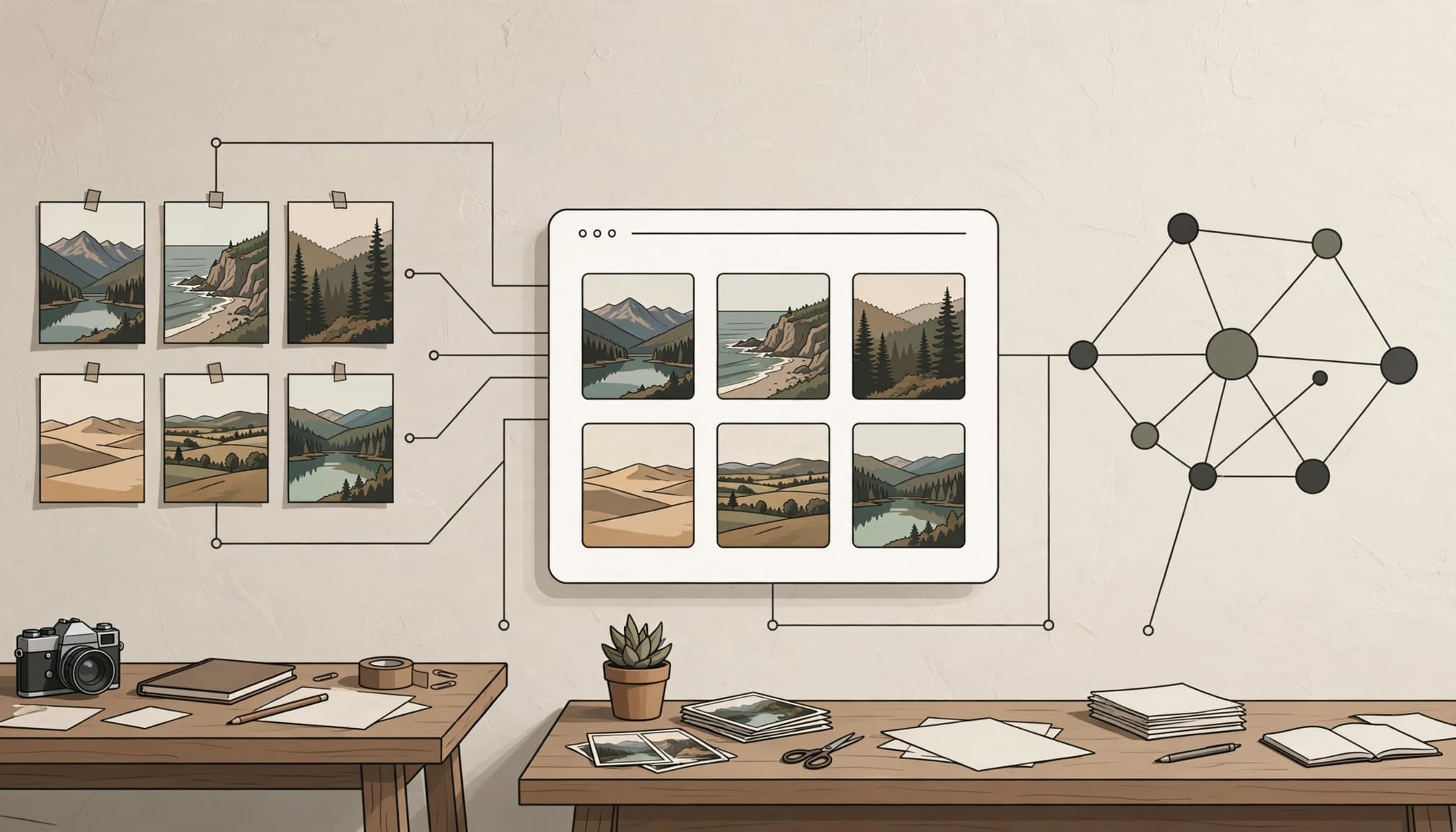
Your website is your home base. Together with your portfolio and supporting channels, it creates your online presence.
Social media profiles matter, but they aren’t enough on their own.
A professional website should include your portfolio, contact details, and a blog or gallery where you can keep sharing work. It should also look and feel like the kind of photography you make.
Choosing, organizing, and presenting your images is ongoing portfolio development. Your site should make that work easy for visitors to explore.
If you photograph calm, minimalist scenes, your site should have that same feeling. If you want to work with tourism boards, galleries, collectors, or private clients, your pages need to speak clearly to your target audience.
People may search for things like “landscape photographer near me” or “fine art mountain photography.” The same principles apply to portrait photography and other specialties. Search engine optimization helps your site show up when people are already looking.
Google’s Keyword Planner guide can help you find local and niche search terms. Use those terms naturally in page titles, portfolio descriptions, blog posts, and website copy.
SEO isn’t stuffing a page full of keywords. It’s using the words your potential clients already use when they search.
Instagram is a strong place to show the work and build trust. Social media marketing works best when you post your best images consistently, without stopping at the finished photo.
Share behind-the-scenes stories. Show parts of the process. Use relevant hashtags so new people can find you. Reply to comments, direct messages, and inquiries as part of good client communication.
Authentic interaction matters. It shows people there is a real person behind the photographs. Trust grows through those small exchanges, and trust can lead to clients.
Your website and social channels should help the right people find you, while helping you find clients.
Pinterest works differently. Think of it less like a normal social platform and more like an image search engine. Pins can keep sending people to your site long after you post them.
Add descriptive titles and keyword-focused alt text to your images. Link every pin back to the relevant page on your website or portfolio. Then keep pinning regularly.
A good pin can do more than collect likes. It can keep bringing the right people back to your work.
Networking isn’t about awkwardly working a room or handing out business cards to everyone you meet. It’s about real relationships with people who can help you grow, and people you can help too.
For a landscape photographer, that might mean connecting with event planners, tourism boards, galleries, local photography clubs, workshop groups, or community organizations.
Other photographers can become part of that network too. They aren’t only competition. They may pass clients your way when they are booked, recommend you for a publication or gallery opportunity, or collaborate with you on a larger project.
You don’t have to wait for an in-person event. Comment on another photographer’s work. Send a quick message when something stands out. Share their work when it fits your audience.
Genuine relationships create networking and referrals over time. One good connection can open a door you didn’t know existed.
A business plan is useful. A business plan you never turn into visible, scheduled actions is useless.
Photography businesses don’t stall because people lack ideas. They stall because photographers keep waiting for a better moment, a better website, a better portfolio, or more confidence before they put something into the world.
I know that one well. I carried the idea for this business for around ten years. I collected topics, studied online marketing, filled notebooks, made idea dumps, and thought about the project endlessly.
What I didn’t do was build a consistent public feedback loop.
Stored ideas don’t become a business until real people can see them, respond to them, and tell you what matters.

Perfectionism can keep you busy without moving you forward. You tweak the website again. You compare your work to someone else’s. You wait for the right conditions to launch a project.
But nothing will ever feel fully ready.
Publish the portfolio you’ve been adjusting for weeks. Send the email to a potential collaborator, even if it feels awkward. Share the behind-the-scenes photo without spending an hour rewriting the caption.
You can improve later. You cannot improve something you never publish.
Perfection is the enemy of progress. Small, imperfect actions create the momentum that leads to bigger opportunities.
Ask yourself: What’s one thing I can do right now to move forward?
Then do it.
Taking action isn’t one big leap. It’s showing up regularly, especially on the days when motivation has gone missing.
Systems make that easier. Break a bigger goal into smaller tasks and give those tasks a place in your week.
That kind of time management removes the need to decide what to do from scratch every day. If you want to find clients, break that goal into outreach, follow-up, and portfolio tasks.
For more print sales, you could contact galleries on Mondays, showcase new prints online on Wednesdays, and follow up with potential buyers on Fridays.
A basic to-do list app can work. Trello can work too. The tool matters less than having a clear way to separate what needs attention today from what can wait.
Consistency builds trust with clients and collaborators. More importantly, it builds trust with yourself.
Action often feels uncomfortable. You may need to pitch your work to someone outside your usual circle, pay for a workshop you aren’t sure you deserve to attend, or ask a mentor for help.
That’s part of it.
Failure isn’t the opposite of success. It’s part of the process. Every action gives you one of two things: a win or a lesson.
Instead of asking, “What if I fail?” ask, “What’s the worst that happens if I try?”
The answer is usually less dramatic than your brain makes it out to be. And if something doesn’t work, you have feedback. Adjust and move forward.
Taking action doesn’t mean saying yes to everything. In the early days, every collaboration or job can feel like something you should grab.
That can lead to burnout. It can also pull you away from the work that matters most.
Before you say yes, ask:
Not every useful opportunity pays immediately. But it should have a clear purpose.
Saying no sometimes gives you room to say yes to better things.
Most photographers don’t put writing near the top of their skill list. It should be higher.
Your photos can communicate an artistic vision, but words give people the context. They explain why you were there, what pulled you toward a scene, and what technical skills helped create the image.
Writing helps you connect with people, build trust, market your work, and pitch opportunities. It works alongside your photographs. It doesn’t compete with them.

A misty mountain photograph can stop someone scrolling. But why did that photograph matter to you?
Maybe it was the solitude. Maybe you hiked 10 miles before sunrise. Maybe the weather fought you all morning. Maybe the image came after several failed attempts.
That context gives the image more weight. It makes people feel part of the experience instead of only looking at the final frame.
Use writing in social captions, blog posts, and the About page on your website. You don’t need to write a novel under every image. Tell people something real.
A useful prompt is simple: What drew me to this scene, and what did it take to photograph it?
You might explain the camera operation, lighting techniques, composition and design, or post processing behind the finished image. Those details can reveal the creative photography choices that shaped the story.
Photography is often about more than technical perfection. I see that on expedition trips all the time.
After each expedition, I create a slideshow using photographs and video from the journey. Guests sometimes come up afterward with tears in their eyes because it brought the experience back for them. Others immediately want to know which camera and lens I used, or which editing software helped finish the images.
Both responses matter. The emotional connection and the technical curiosity can exist in the same audience.
Clear writing affects how clients see you.
When someone emails about a print, reads your pricing guide, opens a contract, or sends a message on Instagram, your client communication is part of the experience. Clear, professional writing makes you look organized and reliable.
Sloppy writing can hurt that trust, even if your photographs are excellent. Typos, unclear sentences, and confusing responses make people wonder whether the rest of the process will be messy too.
Before sending something important, check that the writing is clear, the spelling is clean, and the next step is easy to understand.
Every written interaction is a chance to show people you take the business seriously.
Photographs get attention. Words often help someone decide what to do next.
Captions, blog posts, newsletters, website copy, and social media bios all shape how people understand your work and what you offer. Good writing helps people stay interested long enough to book you, buy a print, join a workshop, or follow your work more closely.
Blogging can also help people find you online. Share stories from the field. Explain how you shot an image. Write about editing decisions or low-light photography. Use relevant search terms naturally where they fit.
Useful content can establish you as someone worth learning from. It can also create other ways to earn, such as presets, workshops, or courses.
The important part is that you are giving people more than an image. You are giving them a way to understand your experience.
Write pitches that don’t sound copied and pasted
Sooner or later, you may need to pitch a gallery, tourism board, publication, or brand partner.
Keep the message concise. Say who you are, what you are offering, and why it matters to the person receiving it.
A five-paragraph email that circles the point usually won’t get read. A generic copy-and-paste pitch won’t make much of an impression either.
Do your homework. Tailor the message to the recipient. This saves time management headaches by reducing unnecessary back-and-forth.
Show that you understand what they do and why the partnership could make sense.
The goal isn’t to sound salesy. The goal is to make the value of working together clear.
Frequently Asked Questions
Photographers need financial management, marketing, and action-taking skills to build a sustainable business. Writing is also important because it helps explain the value and context behind the work.
Start by calculating the full cost of equipment, travel, production, editing, communication, and delivery. Add a profit margin that supports your goals, then consider your market, experience, and how the work will be used or licensed.
Marketing helps the right people find your work, understand what you offer, and build enough trust to make an inquiry or purchase. A professional website, consistent social media, search engine optimization, and genuine networking can all support that process.
Break larger goals into smaller tasks and schedule them during the week. Simple systems, such as regular outreach, portfolio updates, and follow-ups, reduce the need to rely on motivation.
Writing adds context to photographs and helps people understand your experience, creative choices, and services. Clear captions, website copy, pitches, and client communication also make you appear more professional and trustworthy.
Financial management gives you a foundation. Marketing helps people find your work. Action-taking gets the work out of your head and into the real world. As a professional photographer and small business owner, writing helps you explain why your work matters.
The bigger point is simple: business skills are learned, from sales and pricing to systems that keep moving when motivation drops. A sustainable photography business takes more than strong images, and those skills should support your artistic vision.
You don’t need to fix everything at once. Pick the area that has been holding you back, then make it part of a simple business plan.
You can be highly skilled at landscape photography and still make no money from your work. Not because your photos aren’t good enough, but because you’re treating a business like a personal creative project.
If you want to photograph what you love and follow Mother Nature with no concern for sales, that’s fine. But if you expect people to pay you, the customer has to matter as much as the photograph.
The hard part isn’t finding better light. It’s dropping the fantasy that business work makes you less of a real photographer.
“I just want to shoot what I love and still make money from it” sounds reasonable. It isn’t, at least not if you expect that idea alone to build a business.
You can photograph the locations and subjects you care about purely because you love doing it. Or you can create work, products, and services that people are willing to buy. Sometimes those overlap. But you can’t assume they will.
When you insist on photographing only what interests you, while expecting buyers to pay for it, you’re putting your own preferences ahead of the market. That’s a selfish way to run a business.
Are you starting a photography business for yourself or for the customer?
A personal creative activity is about what you want to make. A customer-focused photography business starts with what people want, need, and will pay for.
Many photographers carry around a version of what a “real” landscape photographer looks like.
They carry serious camera gear and travel the world for outdoor photography. They photograph mountains and lakes, chase perfect light, and spend endless hours outdoors with Mother Nature as their backdrop. They don’t give a shit about money, marketing, or business strategy.
It sounds nice. It also keeps a lot of photographers broke.
The fantasy says a real photographer should protect their artistic vision, not care about the commercial side. So marketing feels dirty. Selling feels beneath you. Building an audience feels like a distraction from the real work.
Then the same photographer gets frustrated because nobody buys their prints. Or because clients are hard to find.
That contradiction creates unmet expectations:
Romanticizing photography is often a way to avoid the work you don’t want to do. Marketing. Sales. Strategy. Learning what people buy. It can also lead to burnout in landscape photography and creative burnout when the dream never matches reality.
There are talented photographers who never make a cent. Their problem isn’t always the quality of the images.
The problem is that they never learn how to turn their landscape photography skills and knowledge into something people can buy.
The photographers making the most money aren’t always the best or most award-winning photographers. They’re often the ones who understand how business works. They know how to get attention, build trust, and turn interest into customers.
Photographers who know business and marketing make the most money.
That doesn’t mean you need to become some loud online marketer. It means you need to stop pretending marketing doesn’t exist because you’d rather be out shooting.
A useful photography business overview from PicDrop makes the same basic point: good photography is only one part of the work. A business also needs a way to reach the people who might buy. Online courses can turn your knowledge into side income beyond individual image sales.
I had years of marketing experience before I started selling landscape prints online. Then I did the least strategic thing possible.
I uploaded photo after photo and waited for print orders.
A framed print sold for around $400. An unframed print sold for about $300. On paper, that sounded decent. In reality, each order carried costs for printing, framing, shipping, camera gear, heavy camera bags, and my post-processing workflow. Shipping inside Norway alone cost roughly $20 to $30.
And that was before counting repeated field trips, hours outdoors, and Mother Nature’s refusal to produce a usable image every time. Selling through tourist towns or art fairs would have meant a different cost and distribution model, with travel, booth fees, and unsold inventory.
I sold a few prints. There was barely any profit left.
The lesson wasn’t that prints are bad. The lesson was that posting a product isn’t the same as having a sales system. Print sales can demand repeated effort without creating reliable income, which can lead to burnout in landscape photography. I eventually moved toward teaching Lightroom because I needed an offer that wasn’t tied to a fresh print order, framing time, and shipping every time someone bought.
A photography business needs marketing, hustle, and a plan for how it survives. None of that disappears because you care about your craft.
You need to learn how your photography and knowledge can become something useful that people will pay for. That might mean prints sold online, in tourist towns, or through art fairs. It could also mean photography courses, photography workshops, guided trips, photo licensing, or client work.
Partnership-based work with tourism boards or brand deals requires different customers and offers than selling prints. These are different business models, with different messages.
Loving Mother Nature doesn’t define a viable customer segment. You may need several income sources, but each offer still needs a clear purpose.
Before you post another photo and hope it does something, get clear on a few things:
You may need to keep a day job while you build demand, rather than expecting immediate full-time income. Unclear offers and constant unpaid effort can lead to burnout in landscape photography.
You can’t ignore the commercial side and expect commercial results.
People can’t buy from you if they don’t know you exist. That makes building an audience part of the job.
Social media can help with that. A personal website can help too. But posting photos on social media isn’t a complete marketing strategy.
Followers and likes don’t pay you. Attention isn’t a sale.
A lot of photographers post new images on social media with no real strategy behind them. They’re surrounded by other photographers doing the exact same thing.
The result is predictable. They stay unseen in the crowd, hoping something will eventually happen.
I used to think online business would be simple: publish photos and wait for orders. That belief didn’t survive contact with reality. Without the right audience, a clear offer, and a way to follow up, attention doesn’t turn into reliable sales.
A stronger content plan can show your creative process, post-processing workflow, or how Mother Nature shapes a location. A repeatable content and follow-up system is more sustainable than constant posting. It can also reduce burnout in landscape photography.
500px’s guide to marketing photography also places posting alongside email, rather than treating it as the entire job.
Your audience has to know you exist. Then they need a reason to like what you do and trust you enough to buy.
That relationship doesn’t come from throwing another mountain photograph into a feed and disappearing.
Social media reach can be mediocre, which makes follow-up difficult. Email gives you a more direct way to stay connected with people who have already shown interest.
Social media can attract attention. Email marketing helps you build the connection that can turn followers into customers.
Many photographers don’t understand their market because they haven’t separated their product from their peers.
If you sell prints, your buyer is different from someone buying a photography course. A workshop attracts a different person again.
| What you sell | The audience you need to understand |
|---|---|
| Landscape prints | People who want images to display or keep |
| Photography courses | People who want to learn photography |
| Photography workshops | People who want instruction and hands-on learning |
| Photo licensing | People who need photographs for a specific use, including stock photos |
The point is simple. You can’t assume one audience wants everything you make.
If you sell landscape prints but spend all your time in a photography community where people discuss camera gear, you might be talking to peers instead of buyers.
How likely is it that another landscape photographer wants to buy your print for their wall?
That doesn’t mean photographers never buy prints. It means you can’t build your whole business around the assumption that people interested in landscape photography are also the people most likely to buy what you’re selling.
I saw a version of this with a Lightroom course. I had nearly 2,000 email subscribers and webinar attendees. I thought that would translate into sales.
It didn’t.
Many people on the list used free editing software or a cheaper Lightroom competitor. The offer was a poor fit for much of the audience. The course taught a paid post-processing workflow, but that wasn’t what many subscribers needed. Five people bought the $299 beta, and they gave very good feedback. But a list full of people who enjoy free photography education is not automatically a list of customers for a paid Lightroom program.
List size means nothing if the audience doesn’t fit the offer.
Some photographers think staying ignorant about photo licensing, sales, marketing, and business proves they’re pure artists.
It’s not. Landscape photography, like any creative work, still needs a market.
A sale isn’t the end of the relationship. In my previous work in medical diagnostics, we didn’t hand a product to a distributor and hope for the best. We trained distributors, followed up, and supported what happened after the sale.
Then I entered online photography and somehow forgot that lesson.
Mother Nature can provide endless inspiration, but she won’t distribute your work. You need to build relationships with tourism boards, galleries, and art fairs through deliberate outreach.
You can’t treat distribution as “put the product in front of people and hope.” That isn’t a strategy. It’s wishful thinking.
The fantasy is endless time in nature with no business pressure. The hope is that one day everything will work out without sustained effort.
Many people want to become a full-time landscape photographer without building the business that makes it possible.
But photography businesses don’t appear by accident.
The reality is less romantic. Time outdoors can mean early starts, long hikes, and heavy camera bags. Mother Nature offers the setting, but you still have to do the practical work.
Waiting for a breakthrough can also contribute to burnout in landscape photography. A realistic business model is more sustainable than hoping for one lucky break.
None of this makes you less committed to photography. It means you’re taking responsibility for the financial viability of the business you want photography to create.
If you want to earn money as a landscape photographer, you need to break the cognitive dissonance.
Stop saying you’re above the capitalist demands of business while being angry that your work isn’t selling. Stop treating marketing as something beneath a real photographer. Stop using passion as an excuse to avoid learning what customers want.
You don’t need to give up photographing Mother Nature or the experiences you love. You may need to spend less time chasing remote views and more time building demand. A day job can support you while you build that demand. That’s not failure, and it can help prevent burnout in landscape photography when your business model isn’t realistic yet.
You do need to understand what sells, who buys it, how to reach those people, and how to build enough trust for them to pay you.
Talent improves the quality of your work, but it doesn’t automatically create customers or sales. Many photographers avoid marketing, audience research, and business planning while expecting their images to sell themselves.
Yes. Photography courses, workshops, guided trips, photo licensing, client work, tourism partnerships, and brand deals can all create income. The right option depends on your skills, audience, and the problem your offer solves.
No. Followers and likes create attention, but attention isn’t the same as a sale. You also need a clear offer, an audience that fits it, and a way to build trust and follow up with interested people.
You can photograph whatever you want as a personal creative activity. But if you expect a business to pay you, you also need to understand what customers want and be willing to create offers they value.
Not necessarily. Keeping a day job while you build demand can provide financial stability and reduce the pressure that contributes to burnout in landscape photography.
Being a photographer who ignores the business side is a fast route to staying broke.
The photographers who get paid aren’t always the ones with the best light, the most expensive camera gear, or the biggest awards. They’re the ones who learn the market, understand their audience, and build a sustainable career around landscape photography.
Drop the fantasy or stay broke. Stop thinking like a dreamer, and start thinking like a doer.

Many landscape photographers limit their earning potential by focusing only on print sales or affiliate marketing. But there’s a better way to make money from your skills. By shifting to digital products like online courses or coaching, you can tap into a much more scalable, profitable business model with diverse income streams. In this post, you’ll learn how to use photography marketing strategies and digital offerings to attract the right audience and build a sustainable business without endless hours behind your computer.
If you want to grow your landscape photography business, you need to stand out. Your value proposition is the key to showing clients why you’re the obvious choice. It’s not about being better than everyone else; it’s about being different in a way that matters to your audience. Let’s break it down.
What makes your landscape photography unforgettable? Many photographers overlook this question. But figuring out your unique selling point (USP) is the secret to thriving in photography marketing. Ask yourself:
For example, maybe your sunrise shots capture light unlike anyone else, elevating them to fine art photography that makes viewers feel transported to the scene. Whatever it is, lean into that uniqueness. Photographers who highlight their distinctiveness are the ones clients remember and hire. A big mistake is to try to copy other photographers work.
Photographers often try to cater to everyone. But if you’re for everyone, you’re for no one. A focused audience is essential for successful photography marketing.
Start by identifying your ideal client. Who do you want to work with? Better yet, who needs your specific style of work? Break it down:
When you understand your target audience, you can tailor your content, messaging, and offers directly to them. For instance, landscape photographers specializing in nature photography can attract travel enthusiasts by targeting online communities that share outdoor adventures.
Understanding your clients’ needs makes your marketing efforts meaningful; you’re not just another photographer, you’re a problem solver. When they see that, they’ll come to you.
A strong online presence is essential for growing your photography business in today’s competitive market. It’s your digital storefront, a way to showcase your expertise, access a wider audience, and build trust with potential clients. Whether you’re just starting or looking to scale, nailing your online presence will set you apart from the crowd. Let’s break it down into three actionable steps.
Your portfolio website is your home base, where people land when they want to know more about you and your work. A well-crafted photography portfolio website does more than just look pretty; it functions as a conversion tool. Here are some essential elements your site should include:
Your portfolio website isn’t just a portfolio; it’s a tool to turn casual browsers into loyal clients and for selling prints online.
Social media is one of the most effective tools for photographers to connect with their audience, build community, and grow their business. But just posting random photos isn’t enough. To maximize your efforts:
Social media isn’t just a display window; it’s your chance to build relationships and showcase your personality.
Great content builds trust and keeps your audience coming back for more. By creating meaningful and educational content, you can position yourself as an expert in your niche. Here’s what you can focus on:
Content marketing isn’t just about selling; it’s about storytelling and creating value for your audience. When you focus on helping and educating, you build trust, and trust turns into clients.
By combining a strong website, active social media engagement, and strategic content marketing, you’ll not only grow your photography business but also create a digital presence that makes potential clients take notice.
Email marketing is one of the most effective ways to grow your photography business while keeping your audience engaged. Unlike social media algorithms that constantly shift, your email list is a predictable channel under your control. It allows you to create personal connections, nurture leads, and convert subscribers into paying clients or customers. Let’s unpack the two key components of email marketing: growing your subscriber base and creating emails that people actually want to read.
Your email list is your greatest asset in marketing; think of it as your community of dedicated followers. But before you start sending emails, you need subscribers. Here’s how you can attract them:
The key to building your email list is to think about what would entice your ideal audience. When you help them solve a problem or offer exclusive value, they’ll be excited to stay in touch.
Once you have subscribers, the next step is ensuring they stay on your list and look forward to your emails. This means creating content that offers value and builds trust. Here’s how to craft compelling emails:
By focusing on value over volume, your email content will not only engage your audience but also establish you as a trusted authority in photography marketing. And when the time comes to promote your courses or coaching, a nurtured email list is the best way to make money, as your audience will be far more likely to take action.
As a photographer, your skills and expertise are not limited to taking stunning pictures. You can turn them into income-generating digital products. By offering products like editing presets, online courses, stock photography, or even virtual coaching sessions, you can create a business that runs 24/7. To diversify your offerings and sell prints online alongside these digital products, expand your revenue streams further. The best part? Once your products are ready, they become a source of passive income.
If you are wondering what digital products you can create, here is a list of ideas tailored for photographers:
The key is to consider what your audience truly needs. What problems can your product solve? Once you find that, it is easier to create something valuable.
Your breathtaking landscape shots are perfect for creating visual assets as digital products. Upload them to print on demand services, where customers design and order items like posters, canvases, or mugs featuring your images, all without you managing inventory or shipping. You can also bundle select landscapes into customizable photo books, available as downloadable PDFs or integrated with print on demand for physical versions. This strategy lets you sell prints online seamlessly, turning your portfolio into passive income. Diversifying to sell prints this way complements your other digital products and appeals to buyers seeking tangible keepsakes from your work.
Pricing your digital products effectively is crucial for maximizing sales and perceived value. Start by researching competitors and your audience’s willingness to pay. For online courses, use tiered pricing such as a basic version at $47, a premium bundle with bonuses at $97, or an all-access pass at $197 to cater to different budgets. E-books and guides typically range from $9.99 to $49, depending on depth; offer bundles like a preset pack plus an editing guide for added value. Consider introductory discounts, limited-time offers, or subscription models for ongoing content. Test prices with A/B splits on your sales pages, and always highlight the return on investment, such as time saved or skills gained, to justify your rates.
Creating amazing digital products is just the first step. To boost sales, you need a sales funnel, an essential online sales funnel that guides potential buyers from interest to purchase. Think of it as a roadmap to turn casual visitors into paying customers.
Here is a step-by-step plan to create your sales funnel:
Your online sales funnel is not something that works overnight. It takes testing and refinement. But once it is up and running, it will sell your digital products on autopilot, freeing you up to focus on creating or even traveling with your camera.
Your connections can be your biggest asset when building a thriving photography business. Networking and fostering meaningful relationships open doors to new opportunities, collaborations, and client referrals. Whether you’re working with fellow photographers or engaging with the photography community, these bonds can help propel your career forward. Let’s explore some strategies to make this happen.
Working with other creatives isn’t just about sharing ideas; it’s about expanding your reach and learning from their experiences. Collaboration can introduce you to a broader audience and spark fresh inspiration for your work. Here are a few ways to do it:
Collaboration isn’t about competition; it’s about growth. By building relationships with other photographers, you not only grow your network but also create opportunities you might never have found on your own.
Your community is the heartbeat of your photography business. It’s essential to stay connected with those who share your passion, whether they’re budding photographers or seasoned pros. Engaging with the community builds trust, elevates your reputation, and keeps you top of mind for potential opportunities.
Here’s how you can foster a sense of belonging:
Authentic engagement is key. Treat your community as more than a stepping stone; see them as collaborators, supporters, and friends who are as invested in this journey as you are. When you show genuine interest, you create relationships that last.
To truly grow a successful photography business, you need to prioritize continuous learning and skill refinement to become a professional photographer. The photography industry is ever-evolving, with trends, techniques, and tools changing rapidly. By committing to your personal and professional development, you’ll not only stay ahead of competition but also deliver better value to your audience throughout your landscape photography career. Let’s explore some key ways to enhance your expertise.
Taking online courses or attending photo workshops is one of the best moves you can make as a professional photographer. These resources allow you to expand your skills, discover new techniques, and gain insights from experts in the field, all from the comfort of your home or at live events.
Here’s why it’s worth your time:
Some great platforms to consider include creative platforms like Skillshare, Udemy. Investing in education is investing directly into the quality of work and services you provide, paving the way to become a full-time landscape photographer.
Photography isn’t a static field. Staying up-to-date on emerging industry trends ensures your business remains relevant and innovative. Are you aware of what’s popular right now? Or what’s expected in the next few years?
For example, AI advancements in photo editing, the rise of authentic storytelling through imagery, and shifts toward environmentally conscious visual narratives are just a few of the major photography trends for 2026. How can you use these trends in your business?
Here’s how you can make following trends a habit:
Ignoring trends could leave your business stagnant. Knowledge isn’t just power; it’s an asset that allows you to define where your services fit into a competitive market. Stay curious, stay aware, and never stop evolving.
In the next section, we’ll discuss how to effectively apply these skills to improve your business operations and attract your ideal clients.
A strong value proposition highlights your unique selling point, such as distinctive editing techniques or emotional storytelling in your shots, setting you apart from competitors. Identify your target audience’s needs, like travel enthusiasts seeking inspirational nature images, and tailor your messaging to solve their specific problems. This focused approach makes you the go-to choice for clients.
Start by offering lead magnets like free PDF guides or presets to attract subscribers via website forms and social media. Send consistent, value-packed emails with tips, stories, and exclusive offers to nurture trust and engagement. Use segmented sequences and calls-to-action to convert subscribers into buyers of your digital products or courses.
Popular options include editing presets, online courses on shooting techniques, e-books on locations, stock photography, and print-on-demand visuals like posters. These create passive income streams once set up, complementing print sales without inventory hassles. Focus on products solving audience pain points, like time-saving editing tools or skill-building tutorials.
Networking opens doors to collaborations, referrals, and inspiration through co-hosting workshops, cross-promotions, and community engagement. Joining groups, photo walks, and competitions builds relationships that expand your reach and keep you top-of-mind. Authentic connections turn peers and fans into supporters who propel your business forward.
Commit to continuous education via online courses, workshops, and trend tracking on blogs like Fstoppers or Reddit communities. Experiment with emerging tools like AI editing and adapt to trends such as authentic storytelling. This ongoing development enhances your skills, keeps your offerings fresh, and positions you as an expert.
Photography marketing is about more than just promoting your work; it’s about solving real problems for your audience. When you align your passion with a solid strategy, you’re not just growing your business; you’re creating multiple income streams that support your ideal lifestyle.
Take the next step today by selling prints online, focusing on digital products, refining your online presence, and engaging with your audience in meaningful ways. Set up an ecommerce store to sell prints alongside physical and digital goods. The skills and strategies you implement now will propel your business forward.
What’s your next move to grow your photography business? Share it with your community or start building that email list; you’ve got the tools to succeed.

Search for how to make money with landscape photography and you will get a familiar shopping list.
Prints. Workshops. YouTube. Affiliate links. Licensing. Presets. Courses. The list can be useful, but it doesn’t tell you what to build first, who will buy it, or why they should care.
As a marketer and landscape photographer I was guilty to do the same mistake as most landscape photographers. I thought selling my images was they way to go to make money. But I soon realized building a full time career selling prints was not a good idea. This business model was viable 15-20 years ago, but not anymore. So I tried to offer workshops and I created presets. I involved in too many products and too many different buyers, it was not sustainable.
So a better place to start is one buyer and one useful result, not a shelf full of half-finished products.
There is nothing wrong with having options. You can sell prints, teach, make videos, recommend gear, or package your editing knowledge.
That list shows many possible ways to earn, but each is only one possible income stream:
Build a thing. Put it online. Wait for buyers.
That is where many photographers get stuck.
You may already have a folder full of finished images. There is an unfinished print store somewhere. A workshop idea sits in your notes. You also have a preset pack that has been renamed twice because none of the names feel right.
That is not yet a photography business. It is a collection of unfinished products with no clear buyer.
You’ve probably seen articles like this list of landscape photography income ideas. Lists can help you see what is possible. They don’t make the decision for you.
A print buyer wants something different from a photographer who needs help making an image. Someone looking for an editing answer has a different problem than someone who wants a gear recommendation.
So don’t ask, “Which income stream should I choose?”
Ask a better question: “Who needs what result from me?”

Here is the shift that makes this easier:
You do not make money from a list of options. You make money by giving a specific person a result they are willing to pay for.
That changes the whole starting point.
Instead of deciding that you need a course because courses are popular, you first find the person with a question you can answer. Instead of opening a print store because you have hundreds of photographs, you ask who wants a photograph and what owning it gives them.
“People who like photography” is not a buyer. It is a crowd.
For a first offer, you need one buyer. Someone clear enough that you could describe them without waving your hands around.
Maybe they want to know where to make an image. Maybe they need help making an image once they get there. Maybe they are stuck in editing. Maybe they want help deciding what to buy.
The paid result may be:
The point is not to choose the coolest product. The point is to give one person a useful answer.
An audience system can support that answer. An online portfolio website can display your work, and a Squarespace website can make it easy to present an offer. But neither proves demand.
An email list can help you test whether people care. A sales funnel can organize a clear offer once you know what people want. Neither can replace a buyer or a result.
Your images matter. They are proof that you have judgment and experience.
A good landscape photograph shows that you made decisions. You chose where to go. You decided what to photograph, when to make the image, and how to edit or present it.
That experience can become the paid offer. But it doesn’t always have to be packaged as the photograph itself.
A print is one way to sell the result of your work. A workshop may sell access to the decisions behind the work. Editing help can sell the knowledge you used after you got home. A recommendation can help another photographer make a buying decision without wasting money on the wrong thing.
That is a much better place to think from than, “What can I sell?”
Landscape photography prints remain a good way to earn. They are not outdated. They are not a bad idea. They are simply one offer among several.
The mistake is treating a print store as the automatic first step because you have images ready to go.
A print offer still needs a buyer. Who wants this photograph? What does it give them? Is it the feeling of a place they love? Is it artwork for a space they care about?
Physical prints, photo books, and other formats can all work. But each needs a reason to exist beyond the fact that you have photographs.
Print on demand can reduce inventory and fulfillment work. It still requires a buyer, clear positioning, and acceptable margins.
If you can’t answer those questions yet, don’t spend the next month organizing files, choosing paper options, and building a store nobody asked for.
You are not failing because the store is unfinished. You may simply be trying to build the product before you have tested the offer.
Print on demand makes testing easier in some cases, but it doesn’t create demand. The same goes for every other item on the list.
Licensing can be another practical option for nature photography. Stock photography websites may give you a way to submit images, including through platforms such as Adobe Stock or Shutterstock.
The platform terms matter. Compare royalty rates before choosing where to upload. Understand the royalty rates before sending a large archive, because modest returns can make the work difficult to justify. But be aware the earning potential on these sites are limited.
A workshop can be a strong offer when somebody wants help making an image. In-person photography workshops can focus on a location, a process, or a specific shooting challenge.
The phrase “I could run photography workshops” is still only an idea. A useful workshop should promise a specific result, such as helping someone plan, make, or improve one kind of image.
YouTube is also not an answer by itself. There are plenty of videos promising a plan for making money with landscape photography. But saying “start YouTube” doesn’t tell you what to make or who it should help.
Affiliate marketing can fit when you have a useful buying recommendation. Your experience making choices can save somebody else from guesswork. But the recommendation must answer a real question. A random list of gear links is not a result.
Presets can package editing knowledge. A focused guide can package one smaller answer. These are digital products when they solve a defined problem instead of copying another creator’s offer.
Online courses can package a larger body of knowledge. They may become digital products too, but they usually require more time, structure, and support than a first paid answer.
Digital products work best when they package knowledge people have already shown they want. Digital products shouldn’t be built simply because someone else is selling them.
Do not build the largest version before testing the smallest useful answer.
A course or a store can take a long time to build. A complicated sales funnel can take a ridiculous amount of time.
Test the answer with a small offer first. Then use an email list to learn which questions remain. A sales funnel can help organize the next step, while an email list can show whether people still want it.
None of those systems prove that a buyer wants your answer. Build the email list after you have a reason for people to join, and build the sales funnel after the offer is clear.
You don’t need to invent a problem when people are already showing you what they want to know.
Look back at the questions people ask about your work. These may come from conversations after you share an image, messages from other photographers, comments, your social media following, or your email list.
The same question comes up all the time in photographer communities: can you make money with this work beyond client shoots? Yes, but the useful next question is narrower. What are people already asking you?
This question-first marketing strategy uses observed questions instead of guesswork.
Write down three questions.
Don’t improve them. Don’t turn them into course modules. Write them the way people ask them.
Then choose one.
Not all three. Not the biggest one. Not the question that would make the fanciest sales page.
Choose the question that is clear enough for you to answer in a small, paid way.
If you have an email list, use it to test interest in that answer before building more. Share the problem, describe the small offer, and watch for replies or sign-ups.
This is where you stop collecting business ideas and start testing one.
Once you have one question, name the person who needs that answer.
| Question | Person who needs the answer |
|---|---|
| Where should I go for nature photography? | A photographer who needs location access or direction |
| How do I make this kind of image? | A photographer who needs help with one image-making result |
| How did you edit this photograph? | A photographer who wants focused editing knowledge, perhaps through digital products |
| What royalty rates should I expect for licensing this image? | A photographer who needs help evaluating a licensing opportunity |
| What should I buy for this need? | A photographer who needs a useful, trustworthy recommendation that may support affiliate marketing |
The wording doesn’t need to be perfect. It needs to be clear enough that you can say, in plain language, who you are helping and what they get.
The selected question should lead to one clear next step in your sales funnel, not a complicated sequence.
If that answer gets validated, it can become one focused income stream.
That clarity saves you from building five offers for five different people.
Your first offer should be small enough to deliver within a week.
That time limit matters because it forces you to stop hiding in preparation. You don’t need a logo, a store, or a polished brand to test demand. A simple landing page or Squarespace website, and direct outreach to an existing audience can be enough.

A person with a location question may pay for access to a useful answer about where to make an image.
The smallest possible sales funnel should lead from interest to payment with as little friction as possible. Invite relevant people from your email list, then deliver the promised result directly. You don’t need a complicated sales funnel at this stage.
The product is not the point yet. The answer is. Your test should validate the result before you expand the digital products around it.
Use your email list to collect replies after delivery. Review responses from your email list to see whether the result felt worth paying for. This gives you evidence about one potential income stream, not a complete business model.
If the answer is no, don’t immediately build a new preset pack, a new workshop, and a new store. Tighten the match.
Make the buyer clearer. Make the problem narrower. Make the result easier to understand.
One test is not a final business decision. It is evidence.
Use this small worksheet before you touch a course platform or start redesigning your print store. Show proof on an online portfolio website, then invite relevant readers from your email list.
Keep it boringly clear. This worksheet tests one possible income stream, not your whole business.
If you need three paragraphs to explain the offer, it is probably too broad. If you need months to build it, it is probably too big. If you cannot name the person it is for, go back to the question and review replies from your email list.
Start by identifying one specific person and one result you can help them achieve. Test a small paid offer before building a large product, store, course, or sales funnel.
Yes, prints can be a valid income stream when they have a clear buyer and purpose. Print on demand can make testing easier, but it does not create demand by itself.
Yes, you can but you need a strategy and a plan. However very few landscape photographers make a full-time career anymore selling prints. You have to think alternative business models.
Pay attention to repeated questions about your photographs, locations, editing, gear, or licensing. Choose one clear question and match it to the person who needs that answer.
Only after you have evidence that people want the answer you plan to package. Begin with the smallest useful version, such as a short guide, focused review, single session, or small digital product.
No. A simple page and direct outreach may be enough to test your first offer, while an email list and sales funnel become more useful after demand is clearer.
The familiar shopping list isn’t useless. It’s just not a plan.
Prints may fit your work. Workshops may fit. Editing help, recommendations, affiliate marketing, and photography workshops may fit too. But none of them is the automatic answer.
Your first job is to find one person who wants one result and offer the smallest paid way to get them there. That first offer is a test, not a complete income stream.
Which question could you answer for one paying customer?
Once one offer is validated, you can expand it into digital products or other formats. They may require less hands-on work, but they aren’t automatic passive income. Licensing can work too, if you understand the royalty rates and commercial terms.
Add infrastructure only after people show interest. A sales funnel can organize the next step, while a website can present the offer clearly. An email list can collect early interest. Later, that email list can support a follow-up. If interest continues, the email list can show whether expansion makes sense.

Being a skilled photographer and building a business are different jobs. You can obsess over lenses, edits, and perfect images while avoiding audience research, offers, publishing, and follow-up.
A useful photography business mindset lets business support your creative work, not replace it. Kim spent years planning a newsletter before he published consistently. Ideas create nothing until readers can answer back.
There is no universal best camera, lens, platform, or business model. Assess your skills, time, personality, travel schedule, and willingness to sell.
Keeping photography as a hobby is valid. But if you keep reading business content, your curiosity deserves a small test.

### Stop Confusing Preparation With Progress
Gear, redesigns, courses, and platform comparisons can feel like work. A website without useful publishing is an expensive empty room.
Try a 90-day test: one audience, regular emails or search-led articles, and one paid offer. Real replies beat certainty.
Your photography business mindset improves when you sell the outcome around the image. Workshops, tours, mentoring, location guides, editing help, and digital products can save a traveler from fumbling with a new camera on a once-in-a-lifetime trip.
On one expedition, guests chose Kim’s funny penguin photographs over a colleague’s technically perfect iceberg. They may have wanted the shared memory, not the photographer’s favorite wall image.
Kim’s Lightroom beta drew five buyers at $299 each, and they gave strong feedback. Yet a broad list and webinars produced fewer sales than expected.
That’s evidence about audience fit, not proof the course lacked value. Test a narrow promise before building everything.
Social attention is the start, not the sale. Publish useful topics such as wildlife photography in Norway, winter bird photography, or a photo workshop in Lofoten.
Build a clear profile, focused landing page, email list, and follow-up. Google’s SEO Starter Guide also stresses helpful, people-first content. Your system must fit real life, especially when expedition work keeps you away for six to eight weeks.
Imperfect emails and offers teach you what private research cannot. Batch and schedule content when travel makes live publishing unrealistic.
No. You need the right people and a clear problem. Five paying customers can teach you more than thousands of passive followers.
No. Test your offer while you have income and credibility. A 90-day experiment gives you evidence without turning it into a dramatic identity decision.
No, but prints aren’t the only offer. Your experience, judgment, and access may solve a more urgent customer problem.
Choose one audience, one problem, and one small offer to test over the next 90 days. Credibility comes from judgment, service, consistency, and results, not expensive equipment.
Build a photography business mindset that leaves room for the work you still want to make.
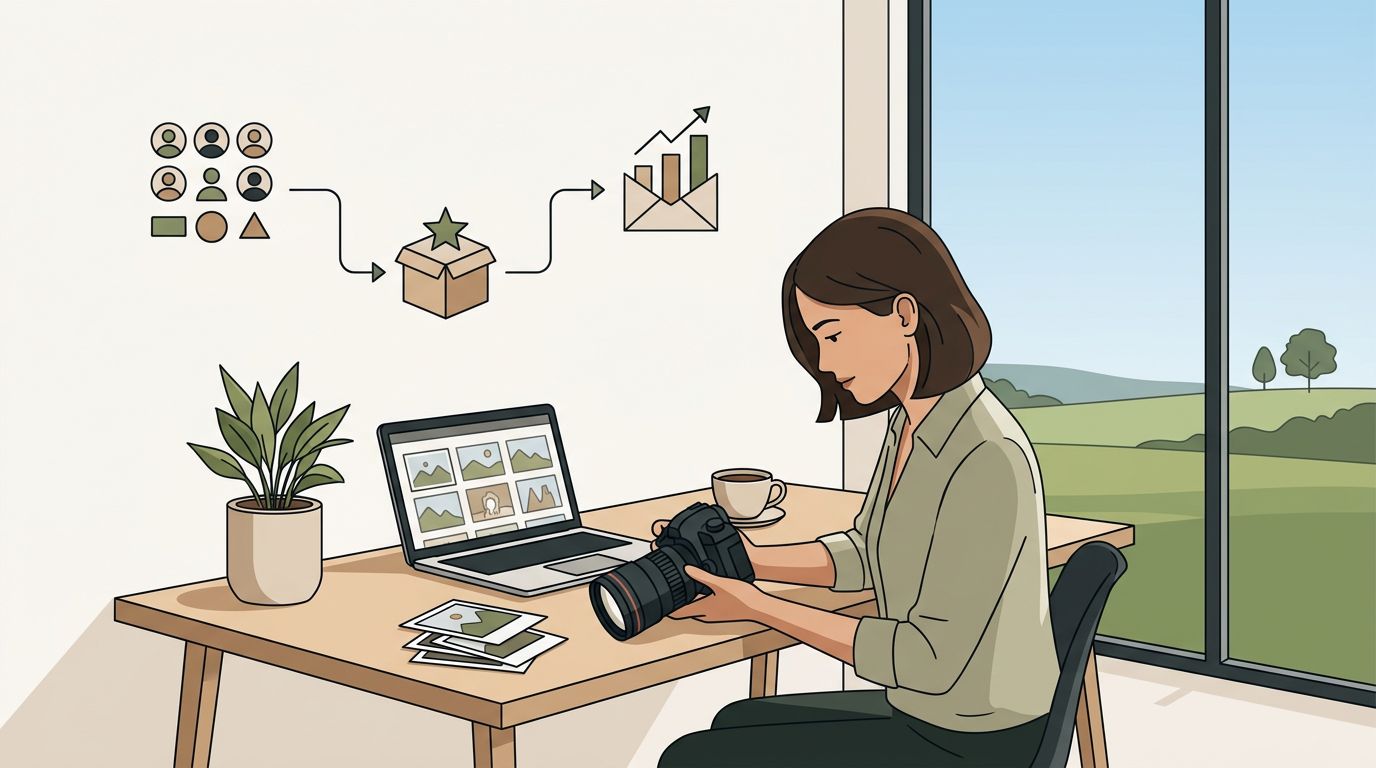
Beautiful photographs can get attention. Occasional print sales can feel like progress. A growing follower count can look even better. None of those things, on their own, is a business plan.
A solid online photography business strategy gives you a more reliable path: help a specific person solve a real problem, offer something worth paying for, and keep the conversation going after someone finds you. That matters if you want more time to shoot, travel, or eventually step away from a 9-to-5 job.
This isn’t a promise of effortless passive income. It’s a practical plan you can test, improve, and shape around your actual life.
Your strategy connects six things: your audience, their problem, your offer, the channel that brings them in, your sales process, and your personal goals.
For example, you might help travel photographers make better expedition images before a once in a lifetime trip. Or you might help experienced landscape photographers turn their knowledge into a course, workshop, or coaching offer.
The right plan isn’t the one a loud YouTuber uses. It has to fit your skills, travel schedule, available hours, and willingness to sell. If you’re away for six weeks at a time with slow internet like me spending six months a year on a ship in remote areas, a weekly video may be a terrible idea.
“Photographers who want to improve” is too broad. It attracts plenty of people who enjoy free tips but have no reason to buy.
Get narrower. Think about genre, skill level, location, goal, budget, and the problem that keeps showing up. You may be talking to landscape photographers who want to sell digital products. You may be helping Arctic travelers who are nervous about using a new camera.
A list full of people chasing sharper photos won’t automatically buy a business course. I learned this the hard way with my Lightroom course a few years back. I had an email list of nearly 2,000 subscribers, so filling webinars sounded promising. But it did not. Many of my subscribers used free editing software or a Lightroom alternative. They did not see how my course would help them edit better images. Five people bought the $299 beta. They liked it, got the full program, and gave good feedback. The bigger lesson was simple: list size is not buyer intent.
Don’t ask, “What’s the best business model?” Ask, “What business am I willing to live with?”
Write down a monthly income target, the hours you want to work, time you want for field photography, and how many live clients you can realistically serve. Then do the math.
One to one coaching and private workshops can pay well, but they are time for money. Prints can be rewarding, but margins get squeezed by printing, framing, packing, shipping, and the cost of getting the photograph in the first place.
Digital guides, courses, and group coaching can help more people without repeating every task for each buyer. They still need work, though. You have to build, market, update, and support them. There is no magic here. There is only a better match between your effort and your goals.
Your audience doesn’t buy because you have nice photographs. They buy because your offer helps them get somewhere they care about.
Start with one offer. Have conversations. Run a small paid beta. Host a webinar and make an invitation at the end. A few paying customers who finish the program and get a result are better proof than 10,000 casual followers.

You have more to sell than a file on a wall. Your field experience, editing process, teaching ability, and business mistakes can become useful products.
You could create an email marketing course for photographers, a composition guide, a landscape editing resource, a live webinar, group coaching, or private mentoring. A premium workshop could include field sessions at dawn and dusk, then business mini-sessions during the quieter middle of the day.
Courses are a real option for photographers ready to teach a clear outcome. Platforms and course sellers often share practical guidance on selling photography courses, but don’t build a course because it sounds scalable. Build it because people want the result.
Affiliate income can also work. Random gear links under every video usually don’t. Recommend products you actually use, explain who they fit, and offer a useful bonus that helps buyers get started.
Price isn’t a number you pull from the air. Consider the result, alternatives in the market, delivery time, customer support, production costs, and your capacity.
A $40 guide that solves a painful problem can make more sense than a $300 print with thin margins. A $1,000 coaching package can make sense if it helps a photographer avoid months of random posting and weak offers.
Test the price with a beta group. Don’t assume a large email list will buy. Five customers can be useful evidence. Five customers can also show you that the message, audience, or offer needs work. Both are helpful.
A good promise names the person, the problem, and the useful outcome.
Try this structure:
I help [defined type of photographer] get [useful result] without [frustrating obstacle].
“I help landscape photographers build an email list that leads to course and coaching sales” will attract different people than “Learn to take better photos.”
The second message may get likes. The first one speaks to people trying to build a business.
Social media is useful for attention. It is not your sales system.
Every photographer posts nice images. Most people scroll past them in seconds. Your content has to show a problem, teach one helpful idea, and give the right person a clear next step.
Post less content that says, “Here’s another photo,” and more content that helps your audience make a decision.
Talk about choosing an offer, building an email list, pricing a workshop, validating a course idea, or getting off the weekly-video treadmill. Share field stories too. They make the lesson real.
Customers don’t always care about the same things you do. On expedition trips, guests sometimes chose memorable wildlife moments over the technically perfect iceberg image. They were buying a memory and a story, not a score for sharpness.
That same rule applies to offers. Don’t guess what people value. Ask, listen, and watch what they pay for.
Most people won’t buy the first time they see your offer. They may be interested, busy, doubtful, or simply not ready yet.
A useful email sequence can welcome a new subscriber, teach one focused idea, share proof, answer objections, and make the next offer feel logical. Your list is an audience you can contact even when Facebook, Instagram, or YouTube changes the rules.
That follow-up is where many photography businesses fall apart. Posting is not marketing. Following up is part of selling.
Your website, social profile, Facebook group, webinar, lead magnet, and emails should point toward the same audience and offer.
Ask people to download a guide, join a webinar, reply to an email, or book coaching. Pick one action per piece of content.
Don’t fill your website with 14 products and 40 buttons. A website without useful publishing and a customer path is an expensive empty room.
A business should work when you’re home, when you’re traveling, and when work gets busy. Copying somebody else’s content schedule is a fast way to hate your own business.

### Choose Tools That Reduce Work
You need basic tools: a website, email platform, payment system, booking tool, course host, and analytics. Start simple.
AI can help you research, outline, repurpose ideas, and answer common customer questions. It can’t replace your judgment or your time in the field.
Don’t spend six months redesigning your site, buying another lens, or collecting 500 notes. Publishing and customer conversations give you better evidence.
Track where subscribers come from, email signups, replies, click rates, webinar attendance, sales calls, conversion rate, refunds, completion, and profit.
Page views and follower counts can be nice. They can also lie to you. A small list of committed photographers is worth more than a huge audience that only wants free camera tips.
Choose one audience and one problem. Publish useful content. Create one lead magnet. Send regular emails. Invite people to a webinar or beta offer.
Review the evidence after 90 days. What got replies? What brought qualified subscribers? What did people ask to buy?
This test isn’t a permanent identity decision. It is a way to stop guessing. Consistent publishing can teach you more than years of private planning.
No. You need the right people and a clear offer. A small beta can tell you far more than a broad list full of freebie seekers.
Yes, if you enjoy it and the numbers work. Treat prints as one revenue stream, not the entire plan, unless you have proven demand and healthy margins.
Start with the format that fits the problem and your capacity. Coaching gives you fast customer insight. A course can work once you know the questions, obstacles, and result people will pay for.
Post at a pace you can maintain. Two useful posts a week that lead people to your email list beat daily content that burns you out.
It can be, if your recommendations are relevant and trusted. Low-commission gear links alone rarely build a strong business, especially when every other photographer is posting the same links.
A strong online photography business strategy starts with a defined person, a valuable problem, a profitable offer, and a repeatable path from attention to trust to sales.
Stop waiting for the perfect website, camera, platform, or business model. Write down who you want to help, the result you can help them get, the first offer you will test, and the next email or piece of content that starts the conversation.
You can know your camera inside out and still feel lost the moment money enters the frame. That happens because marketing looks noisy from the outside, even when the core idea of a marketing strategy is simple.
You don’t need a photography business strategy. You need a clear problem, a clear audience, and a product that helps them. Once you see where most photographers get pulled off course, the path starts to look a lot less foggy.
At the center of every good business is a plain idea: a target market with a problem and a product that solves it. The tools around that idea change. Platforms rise, reach drops, trends come and go. Still, the basic structure holds.
If you sell digital products as a photographer in the landscape photography niche, the same rule applies to you. Your audience is not “everyone who likes nice photos.” That group is too broad, too passive, and too hard to sell to. A business gets stronger when you speak to a specific person with a specific need.
For example, your audience could be:
The principles are the same, even when the pricing structure changes. You might sell a short course, a six-week coaching program, a webinar, or a small digital offer. What matters is whether the person on the other side feels seen and believes your product will help.
That sounds easy on paper. In practice, this is where many photographers drift. They start with a product idea, then go hunting for anyone who might buy it. A stronger business works the other way around. First, you understand the audience and the problem. Then, you build the offer.
You don’t struggle because business is more complex than other people say. You struggle because, in this competitive market, the internet throws tactics at you all day, and tactics are louder than strategy.
There is an old saying about not seeing the forest because of the trees. That is what happens when you focus on every post, every tip, every social media platform, and every new promise, but never step back and look at the whole business.
Many photographers do this without noticing. One week they chase reach on social media platforms like Instagram. Then they move to TikTok. After that, they hear someone built an audience on Substack, so they start writing there. Soon, they are busy every day and clear on nothing, neglecting essentials like an online portfolio and professional branding.
This gets worse when you build your whole business on borrowed attention. Many photographers grew quickly on Facebook years ago, when organic reach was much higher. Then the reach dropped, and the same story repeated on other platforms. If your plan depends on a feed showing your work to strangers for free, your business always feels fragile.
When you confuse tactics with strategy, every platform starts to look like the problem.
The platform is rarely the main issue. More often, the problem is that you never chose a clear direction in the first place.
Online business advice often comes wrapped in polished certainty. Someone says social media is the answer. Someone else swears by Substack. Another person sells low-ticket products and claims volume wins. Then another builds a strong business with a high-ticket offer and says premium is the only smart path.
All of them may have proof. All of them may have happy customers. Of course they have successful customers. That still doesn’t mean their method is the best fit for you, even if those customers stick around due to a superior client experience.
What you don’t see is the full picture. You don’t see how many buyers never finished the course. You don’t see how many copied the tactic but never took action. You don’t see how many quit after two weeks because the method asked for a kind of work they hated.
That doesn’t always mean the product was bad. Often, people fail because they don’t take action. They consume advice the way they scroll a feed, then move on before anything has time to work.
As a result, you end up surrounded by competing success stories, each one asking you to believe there is one golden road. There isn’t.
A lot of bad business advice comes from a simple problem. People sell what worked for them, then speak as if it must work the same way for everyone else.
If you step back, you can see that many paths work. The problem starts when you try to walk all of them at once.
This quick comparison helps put the options in perspective:
| Method | Why it can work | Where it often breaks down |
|---|---|---|
| Social media platforms | It can create attention fast | Reach changes, and you don’t own the audience |
| Long-form writing, including blogging for SEO and Substack | It builds trust with thoughtful content and aids search engine optimization | It takes time and steady writing |
| Email marketing list | It helps you nurture leads over time | It fails when your message is vague or your emails are empty |
| Low-ticket offers | They are easier for people to try | You need enough volume to make solid income |
| High-ticket offers | They can be profitable with fewer sales | They need trust, clarity, and a strong problem-solution fit |
The takeaway is simple. You can’t run all methods well at the same time. If you try, without a clear content strategy your energy gets thin and your message gets muddy.
This is where photographers often burn time. You may hear that email is dead from people who sell Instagram programs. You may hear that social media is useless from writers who built an audience through email. Advice gets bent by the business model behind it.
So, instead of asking which method wins, ask which method fits your audience, your product, and your way of working. If you want to sell digital products and keep more time for shooting and travel, you need a model that can scale without demanding your presence every hour. That is why courses, webinars, and group coaching often make more sense than building your whole week around chasing the algorithm.
Strip away the noise, and one truth stays standing:
Solve a problem for the target market at the right time.
That sentence is the spine of your business. Every part matters.
The target market means you know who you want to help. That could be landscape photographers trying to build an email list, or travel photographers who want a simple online offer. It is not the same as posting to a general crowd and waiting for someone to raise a hand.
The right problem means you name something the audience already cares about. “I teach photography” is too broad. “I help landscape photographers use email marketing to sell their course” is much clearer. People pay when they believe you understand the pain they already feel.
The right time matters because buyers rarely purchase the first time they see you. They need repeated contact. They need useful content. They need to trust that you can guide them. For a full-time photographer, this builds repeat business and a positive client experience. That is why email still matters so much. It gives you a place to keep the conversation going after the scroll ends.
For photographers, this point is easy to miss because so much effort goes into posting images. Beautiful work can get attention. It does not always create sales. Most people move past a photo in seconds unless the message around it connects to a need they already have.
The biggest gap is rarely effort. It is a photography business strategy.
Many photographers start a business the same way they head out with a camera on a clear morning. They feel inspired, they pack the gear, and they trust that something good will appear. That spirit is great for art. It is weak for business.
If you start with hope for the best, you make random choices. You create an offer because you feel like it. You post because you think you should. You change prices, topics, and platforms without any real target. Soon, your finances feel random because your decisions were random first; this eats into your financial runway and ignores the cost of doing business.
A strategy gives shape to the work. It tells you who you help, what you sell, why people buy it, and how they move from stranger to customer. Without that, you are busy, but your business has no frame.
This is also why many photographers struggle with profit even when they are talented. Art skill and business skill are not the same thing. You can make strong images and still have no plan for audience, messaging, sales, or follow-up.
When there is no strategy, every tactic feels urgent. You try social media platforms for a while. Then the numbers stall, so you switch. You hear about another creator doing well with newsletters, so you start that. Then you see someone selling a high-ticket program, or chasing paid advertising and mini sessions, and now you think your prices are wrong.
That cycle can eat years.
It also hides a deeper problem. Many photographers think marketing means posting photos online. That was never enough, and it works even less now because everyone is posting photos. If your audience doesn’t know what problem you solve, your content becomes another image in a fast-moving stream.
For landscape photographers, copying wedding industry or portrait business tactics often makes this worse. Those photographers sell to people who already want photos of themselves or their family. Unlike the wedding industry, you don’t have that built-in demand. You make the work first, then you must connect it to a buyer with a reason to care. That requires sharper messaging and a clearer offer.
If you want digital products to give you more freedom, the business needs structure. A course, a webinar, or a group coaching offer can scale because one offer can help many people. Still, even a scalable product fails when you don’t define the audience, the problem, and the path people take to buy.
A useful strategy does not need to be fancy. It needs to be clear enough that you can follow it for months without changing direction every week.
Start with one audience, your target market. Choose people you understand well, perhaps peers in your photography niche. If you have spent years in travel or landscape photography, that is a real advantage because you already know their frustrations, goals, and blind spots. Networking groups can help you connect with this target market and refine your focus.
Then choose one main problem. Keep it concrete. You might help photographers build an email list, create their first course, or clarify their business message. A clear problem gives your content a purpose.
Next, build one offer around that problem. For many photographers aspiring to become a full-time photographer, digital products are a strong fit because they are more scalable than trading all your time for money. A short course, a live webinar, a coaching program, or a combined course-and-coaching offer can all work if they solve a real problem. Focus on a solid pricing structure and client experience to make them stand out, and use business software to streamline your booking process and business infrastructure.
After that, pick one main way to attract and nurture people. Social media can help with discovery alongside your portfolio website or online portfolio, but it should not be your whole business. Consider a referral program or word-of-mouth marketing for steady growth, and networking groups to build relationships. An email list gives you a steadier path because you can keep helping people after they find you. Useful emails work better than empty newsletters. People stay when the message helps them think, decide, or act.
Finally, keep the message steady long enough to learn from it. The goal is not to try everything. The goal is to stay close enough to one strategy that you can see what works.
It feels hard because marketing noise—platforms, trends, and conflicting advice—drowns out the simple core: a target market’s problem and a product that solves it. Photographers often chase tactics like social media reach instead of building a clear strategy, leading to scattered effort and fragile results. Focus on one audience and offer first, and the path clears up.
No, you can’t run all methods well at once, and borrowed attention from platforms makes your business fragile as algorithms change. Pick one main channel that fits, like email for nurturing leads or Substack for trust-building, alongside your portfolio site. This keeps your message steady and energy focused.
Solve a specific problem for a narrow target market at the right time with a tailored offer, like a course for landscape photographers building email lists. Broad audiences and vague messaging fail; clarity in who you help and why they buy turns attention into sales. Repeat contact via email or content builds trust for the purchase.
Both can work, but choose based on your audience, problem fit, and style—low-ticket needs volume, high-ticket needs trust and clarity. Digital products like short courses or webinars scale well for full-time photographers wanting freedom from one-to-one work. Test what aligns with delivering strong client experiences without burning out.
Pick one audience you know (like travel photographers), one concrete problem (e.g., creating their first online offer), one product (course or coaching), and one attraction method (email list or blogging). Use your portfolio site for branding and stay steady for months to learn what works. This structure scales effort into steady growth without constant pivots.
Business feels hard when every voice online pulls you toward a different tactic. That noise fades once you build a solid marketing strategy instead of impulse.
You don’t need every platform, every trend, or every method. You need a clear audience, a real problem, and an offer that solves it well, supported by foundational pieces like your online portfolio, portfolio website, and professional branding.
When you make those choices on purpose with a focused marketing strategy, marketing stops feeling like a maze. It starts to feel like a path you can follow, including blogging for SEO, joining networking groups, and leveraging co-marketing for client retention and repeat business. Your portfolio website also plays a key role in showcasing your client experience, helping you thrive as a full-time photographer through targeted networking groups.
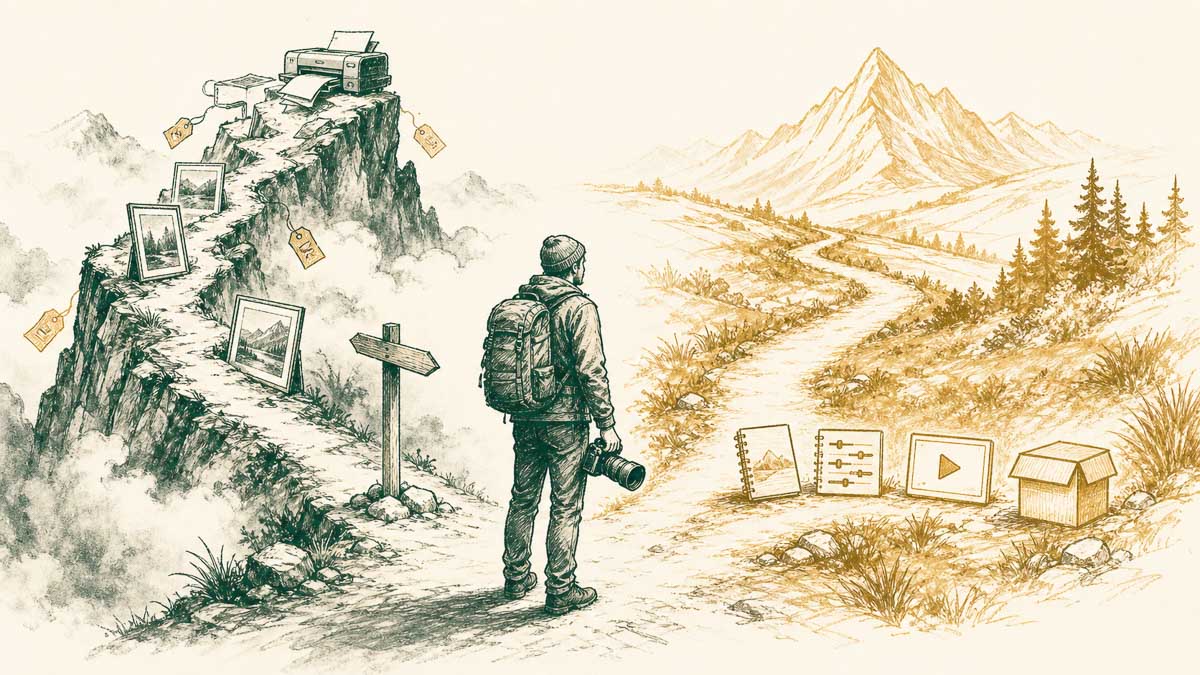
You can follow all the popular photography business advice, do the work, and still feel stuck in your landscape photography career.
That doesn't mean you're lazy or missing some secret tactic. Most business advice for landscape photographers assumes a client-booking photography business model. It's built for wedding, portrait, newborn, and brand photographers. If you're selling workshops, courses, presets, coaching, or other digital products, you're building a different kind of landscape photography business.
The advice isn't bad. It just may not be for you.
A huge amount of photography education is built around service photographers. That makes sense. They are a big part of the market, and their business model is easy to explain.
A person needs photos for a wedding, family session, newborn shoot, or personal brand. They search for a photographer, compare a few options, ask about pricing, then book.
So the advice usually sounds like this:
All good advice, if your business depends on people hiring you for photography services.
But it falls apart when you shoot landscapes and want to build income around education, products, and your audience. You probably aren't waking up to inquiries from people searching for "landscape photographer for hire." You don't have a calendar full of local client sessions to optimize. And there isn't a huge local market of people who need your preset pack before dinner.
The advice isn't bad. It's built on a different business model.
Copying wedding and portrait marketing can feel like pushing a shopping cart with square wheels. You can work hard. You can do all the "right" things. But the model underneath the advice doesn't match the business you're trying to build.
Service Photography Depends on Immediate Demand
A service photographer sells access to their time and skill for a specific event or need. Their clients might be couples, families, brands, or commercial clients with an immediate need.
The path to money is direct. Someone already needs a photographer. The photographer's job is to show up at the right moment with a clear offer.
It usually works like this:
Their marketing job is lead generation. They need the right person to find them at the right time.
That is why local search, vendor referrals, directories, reviews, quick replies, and follow-up systems matter so much. The person is already looking. The photographer wants to be the one they find.
A landscape photographer selling education or digital products has a slower path.
People often discover your work first. Maybe they see an image, watch a video, or find a useful post about editing. Then they follow you. They watch what you share. They read your emails. They spend time with your ideas.
Later, once they trust you enough, they buy.
That purchase might be a workshop, online course, preset pack, group coaching program, one-on-one coaching, or an affiliate recommendation with something useful attached to it. Workshops, courses, and tutorials are all common income options in a nature photography business, as this guide to making money as a landscape photographer points out.
Here is the difference in plain English:
| Service photography business | Audience-based landscape business |
|---|---|
| People need a photographer now | People discover you before they are ready to buy |
| The goal is bookings | The goal is trust and repeated attention |
| Marketing is built around inquiries | Marketing is built around content and nurturing |
| Sales happen close to the point of need | Sales often happen after many touchpoints |
| Revenue depends on the next client | Revenue grows with the audience you keep building |
A service photographer captures demand that already exists. An audience-based photographer builds trust until the offer becomes the obvious next step.
That means audience-based education operates under a different photography business model. The marketing, sales process, and path to revenue all change with it.
Client-based photographers can grow through timing and discoverability. They use local market targeting, including local SEO and website search ranking, to appear when nearby buyers are ready. They build referral relationships with venues, planners, florists, and other local businesses. They collect reviews and run ads when people are in a buying window.
It works because the buyer already has a problem to solve.
You don't have the same setup when you sell a course or preset pack to photographers around the world. Few people search for your workshop with the same urgency as someone looking for a wedding photographer. No wedding planner is referring students to your online course. There isn't a rush of people who wake up needing your editing presets that afternoon.
The mechanics are different. So the tools need to be different too.
This is where many landscape photographers get stuck. They hear generic business advice, try it, get weak results, then jump to another platform. First Facebook. Then Instagram. Then TikTok. Then YouTube Shorts.
Changing platforms won't fix weak social media marketing or unclear audience positioning. Judge each channel's return on investment by qualified subscribers, meaningful conversations, and buyers, not reach alone.
The platform changes. The problem stays the same.
The problem usually isn't the app. It's the mismatch between a client-booking strategy and a business that needs audience trust, repeated attention, and better messaging.
This part is easy to miss.
You might say you want to sell courses, workshops, presets, or coaching. But your content needs to serve photographers and learners within the wider nature photography community, not simply everyone who enjoys landscape images.
You can build an audience that is large but commercially irrelevant if it only includes people who admire your images and never seek help.
Pretty landscape photos can earn likes. They can attract followers. They can show that you know how to make a strong image.
But a finished photo doesn't automatically show that you can help another photographer improve. It may show visual storytelling, but it doesn't explain the decisions behind the story.
The people most likely to buy your products are photographers who want help with something real. They may want to make better composition choices, understand their camera settings, improve their editing, choose gear with more confidence, plan a location shoot, or build a photography business of their own.
They want to know why you used that lens. Why you waited for that weather. Why you picked one composition over another. What went wrong. What you changed in post-processing. How you think your way through a scene.
A smaller audience of the right photographers can build a real business. A huge audience of people who only want a nice image in their feed may not.
Before someone buys a workshop or course, they are asking questions. Sometimes out loud. Usually in their head.
A single viral post rarely answers those questions. Repeated useful interactions do.
That is why your content needs a job beyond getting attention. It needs to show people that you can teach. It needs to make your thinking visible.
Ask yourself:
What does someone need to see from me before they trust me enough to learn from me?
That question clears up a lot of messy marketing. It helps you stop chasing random followers. It gives your content a purpose. And it makes your offers easier to shape around problems people already have.
If you want to make money from photography education and digital products, your marketing needs to do three things well.
It needs to attract the right photographers. It needs to build trust over time. And it needs to move people toward offers that don't require you to trade every hour for money.
A landscape photography business can combine education, products, licensing, and selective services. The lessons shared in this piece on a successful nature photography business are a good reminder that there is no single path you have to copy.
A finished image proves you can make an image. It does not prove you can teach someone else how to do it.
Your online photography portfolio still matters. Pair it with process and teaching content so people can see both your skill and your ability to explain it.
That matters when you're selling workshops, courses, or coaching. A person paying for help needs to believe you can explain your process, not only get a good result yourself.
Show more of the work behind the image. Pull back the curtain.
Useful teaching content can include:
YouTube is strong for this because long-form video gives people time to understand how you think. Photography video tutorials can demonstrate your teaching process especially well.
Instagram and other platforms can still support your social media marketing system. Use them to share behind-the-scenes moments, short lessons, and process breakdowns instead of posting another finished image with no lesson attached.
Written field lessons, editing breakdowns, and offer advice also work well as photography blog content for people who prefer to learn by reading.
When you teach in public, you stop competing only on image quality. Photography competitions can add credibility, but they should support useful teaching, not replace it.
You build authority through clarity.
That is what helps a workshop fill. That is what makes a course feel worth paying for.
Social media is rented ground. Your email list is yours.
Your website and professional portfolio space give you more control than a social feed. Together, they help direct interested people toward your work and your ideas.
That matters because buyers don't all show up on the same day. Someone may follow your work for months before they buy. Another person may need a few helpful emails. Someone else may need to see your ideas in video, posts, and email before they trust you enough to take the next step.
Email gives you a steadier way to stay in touch without fighting for reach every week.
A weak newsletter is a pile of links and a recap of recent posts. Nobody needs another one of those.
Write emails that are worth opening. Teach a lesson from the field. Explain an editing choice. Share a useful idea about offers, messaging, or content. Talk about a mistake. Give people something they can use.
The goal isn't to blast promotions every week. The goal is to stay useful.
If your whole business lives inside social feeds, every algorithm change feels like a crisis. Moving interested people onto your email list gives you a direct line to the people who already care about what you teach.
For landscape photographers building an education business, email is where trust can compound.
A lot of photographers want more freedom, more time to shoot, and more time to travel.
Then they build a business that gives them less of all three.
Some get stuck producing content every day just to stay visible. Others spend more and more time traveling for workshops. Photography workshops can be valuable entry offers and relationship-builders. They don't need to carry the entire business.
If your business only pays when you are filming, traveling, or sitting on Zoom, you are still tied to your time.
Digital products give you another option. Courses, preset packs, guides, and photography books can help more than one person at a time. They may become passive income streams, but only after you account for marketing, updates, and customer support.
You build these assets once, improve them over time, and sell them without starting from zero for every customer. Compare each offer's return on investment in money, time, travel, fulfillment, and support before you commit.
If you want to sell landscape photos, choose channels that fit your audience and workflow. Prints, licensing, and carefully selected products can all play a role.
Premium fine art landscape photography requires clear curation and positioning. Photography print sales also require realistic expectations around production, packaging, shipping, and customer service.
An e-commerce store can house those offers, but not every photographer needs to build one immediately. Print on demand can reduce inventory and fulfillment work, though margins and quality control need careful evaluation.
Licensing can create another useful path. You can license landscape photos for editorial, tourism, publishing, or commercial use when the rights and usage are clear.
Stock photography sites may offer reach, but they usually require a different approach to volume and pricing. Custom image licensing is more tailored, so the agreement should reflect the specific client, usage, and exclusivity involved.
An image pricing strategy should account for usage, exclusivity, production effort, and what your audience is willing to pay. Dropping gear links everywhere and hoping for clicks is weak.
Recommend products that fit the people you serve, then add something useful around the recommendation. That could be setup guidance, a simple workflow, or a bonus resource.
The point isn't the link. The point is the trust behind it.
A lot of bad strategy starts with the wrong question.
If you wake up asking, "How do I get my next client?" you will naturally look for tools built for client work. You will think about bookings, inquiries, local traffic, and quick conversions.
That sends you back to advice that doesn't fit.
The better questions are simpler:
Who are you trying to help, and what do they need to see before they trust you enough to buy?
Answer those honestly, and your content gets clearer. Your offers get clearer. Your messaging gets clearer. Even your platform choices get easier because you stop trying to be everywhere for everyone.
A business plan, insurance, contracts, and an understanding of sales tax still matter. They are the basic foundation of a real business. But they don't fix a marketing strategy built for the wrong business model.
An audience-based business is not mainly trying to fill a calendar with sessions.
You are building relationships with relevant people. You are giving them useful ideas over time. You are making it easy for them to take the next step when they are ready.
That means follower count is not the only number that matters. In some cases, it barely matters.
Pay attention to signals that show whether the right people are finding you:
Consider the return on investment of each activity, not just its effect on follower growth. Qualified relationships, sales, time saved, and creative freedom can all matter.
You are not trying to become famous to people who enjoy pretty pictures. You are trying to become useful to photographers who need help.
You don't have to throw out every piece of photography business advice. You only need to stop copying tactics without checking whether they fit.
Before you follow a new strategy, ask a few questions.
The right strategy should support a sustainable landscape photography career, not create another job. If the advice helps you serve your audience better, keep it. If it only makes sense for someone filling a local calendar with client sessions, leave it where you found it.
Most standard photography advice focuses on local bookings, inquiries, reviews, referrals, and immediate client needs. That works for wedding and portrait photographers because people are already searching for someone to hire.
Landscape photographers selling workshops, courses, presets, or coaching often need to build trust with a global audience. The sale depends less on being found at the perfect moment and more on staying useful until someone is ready to buy.
The strongest audience is usually other photographers who want practical help.
They may want better field technique, stronger composition, editing guidance, gear advice, location planning, or business support. They aren't only there to admire your images. They want to understand how you create the result and improve their own work.
Show the thinking behind each image.
Share field workflows, location decisions, composition choices, editing lessons, gear explanations, mistakes, and practical business lessons. A finished photo proves you can shoot. Process-based content shows that you can teach.
Build a system around useful public content, an email list you control, and offers that help more than one person at a time.
Workshops and one-on-one coaching can still be part of the business. Courses, presets, guides, group programs, and useful affiliate recommendations can reduce the pressure to sell your time every month.
The problem isn't that you need another social platform or random tactic. It's trying to force a client-service playbook onto an audience-based business.
Get clear on who you help. Teach useful ideas in public. Move the right people onto your email list. Build offers that create income without pulling you away from the photography and travel you care about.
The right strategy should help you build a sustainable landscape photography business that earns from your knowledge while leaving room for photography, travel, and creative work.
Page [tcb_pagination_current_page] of [tcb_pagination_total_pages]