
A strong photograph can stop someone in their tracks. Understanding why followers don’t buy begins with what happens after they pause.
If they visit your profile, can they learn something from you, or are you simply building a passive audience of Instagram followers? Can they subscribe, understand what you believe, and find what you offer without digging through nine months of posts and a link-in-bio that looks like a junk drawer? Attention isn’t trust, and trust isn’t a sale.
The real question isn’t whether people notice your work. It’s what happens after they do.
Key Takeaways
- Attention is not trust, and a strong photograph needs a clear path toward education, subscription, and an offer.
- Posting more, chasing reach, and tracking vanity metrics do not replace a defined buyer journey or a real sales system.
- Writing builds trust, email creates memory, and clear offers give interested people a reason to return and buy.
- Buying followers creates fake engagement, weakens useful audience data, damages brand reputation, and may lead to account suspension.
- Build an authentic audience through useful content, compliant tools, and owned channels that continue working after a post disappears from the feed.
When attention has nowhere to go
A photograph gets attention. Someone likes it, maybe follows you, maybe clicks through to see more.
Then they look around and find nothing that continues the relationship. No useful ideas. No clear point of view. No way to stay in touch. No obvious offer.
That attention leaks out through the floor.
Most photography accounts don’t fail because the work is bad. They fail because quality content has no defined buyer journey for their target audience. The image does its job, but nothing catches the person who noticed it. Nothing gives them a reason to stay. Nothing turns that small moment of interest into trust.
A one-page marketing plan that names the buyer, the offer, and the path between them fixes more of that than another post will.
Some creators try to bridge the gap with comment automation through platforms like ManyChat. But automation only works when it leads people toward a clear destination.
What a new visitor should be able to find
A visitor shouldn’t have to become a detective to understand your work and business. They need to be able to find:
- What you can teach or help them with.
- What you believe about photography and the work behind it.
- A simple way to subscribe and hear from you again.
- A clear offer, without hunting through old posts or a cluttered link-in-bio.
Prospective clients also look for testimonials and social proof before they decide to take the next step.
A photo can get someone through the door. If the room is empty, they leave.
Posting again is the easy move
When nothing happens after a post gets attention, the usual response is simple: post again.
It makes sense. Posting is familiar. You know how to do it. Another image, another set of Instagram Reels, another caption, another chance to chase organic reach.
But more posts don’t solve the real problem if there’s still no path after the post.
Social media can make you feel productive
You can spend two hours making a post. Reply to comments. Check your stats. Adjust hashtags. Watch the views and interactions climb.
Racking up views and interactions can create vanity metrics that don’t translate into paying customers, even among loyal Instagram followers.
I’ve done this. It feels like work because it eats the day.
Targeted paid ads can create a clearer acquisition path, but posting feels easier because it’s familiar and immediate.
I had years of marketing experience before I started posting landscape photographs online. Then I did the least strategic thing possible. I uploaded image after image, added occasional sales posts, and waited for print orders.
A few prints sold. Basic comment automation through ManyChat might have saved time, but it wouldn’t have replaced a real sales system.
A framed print at around $400, or an unframed one at around $300, wasn’t much of a business once I counted the field trips, printing, framing, packing, and shipping. I was posting a product, not building a sales system.
Time spent isn’t always progress made.
Business has a different smell
Real business isn’t always fun. It smells like offers, follow-up, boring systems, and uncomfortable clarity about who you help and why they should care.
Posting lets you avoid that stuff.
It’s easier to make another image than to answer the harder question: what happens after someone notices you?
That question is where the work starts.
Build something that stays
Social media is for discovery. Writing is for trust. Email is for memory. Offers are for money.
It’s a simple chain. Annoyingly simple, which may be why so many photographers ignore it.
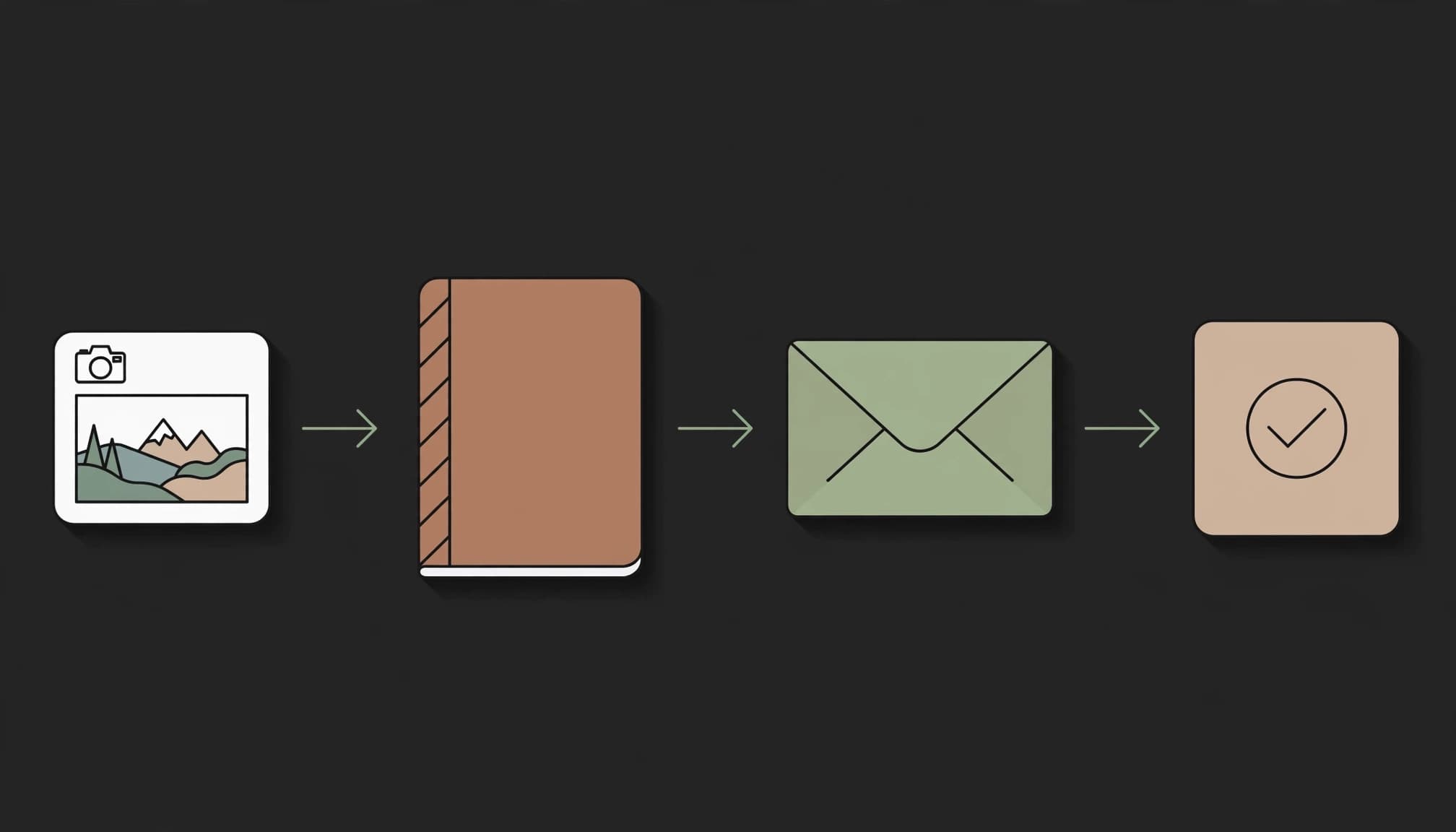
Let each part do its job
A strong image can stop someone. It doesn’t need to do everything else too.
Instagram Reels can create discovery, but they shouldn’t be your entire business. Writing gives people a reason to stay. It helps them understand your point of view, what you care about, and why your experience may matter to them. A good piece of writing can turn a passing visitor into someone who pays attention.
Email gives you a way to bring the right people back. Building an email list through deliberate email marketing insulates your business from shifts in the Instagram algorithm. Direct attention can improve conversion rates more reliably than relying on spontaneous sales posts.
Then there’s the offer. A clear offer gives someone a reason to buy when the timing is right.
Photos create interest. Writing gives that interest somewhere to go.
Make the offer easy to find
An offer shouldn’t be buried under months of posts or hidden behind a messy link-in-bio.
People need to understand what you’re offering, whether it’s for them, and where to take the next step. That’s it.
ManyChat can streamline the first entry point. Strategic comment automation can guide warm leads into your email list and offers, while ManyChat keeps the path simple.
The point isn’t to yell louder in the feed every day. It’s to build a place where the right people can return.
The questions posting helps you avoid
I spent around ten years collecting ideas, studying online business, filling notes with topics, and thinking about what I might build.
That kind of preparation can feel smart. Sometimes it’s just a way to stay safe. Shortcuts make it easier to avoid harder questions. Ignoring engagement quality or tolerating fake followers can weaken genuine social proof, causing credibility loss and damaging your brand reputation.
Aggressive, unvetted growth hacks can even trigger an account suspension.
Publishing puts your thinking in front of real people. It creates feedback. It forces clarity. Constant posting can look like action while helping you avoid the questions that would make the business clearer.
- Who do you help?
- Why should they care?
- What can they learn from you?
- Can they subscribe and hear from you again?
- Can they understand what you believe?
- Can they find your offer without relying on uninspired sales posts, using comment automation powered by ManyChat?
- What happens after they notice you?
Those aren’t small questions. But they matter more than another round of hashtag tweaking.
A following and an audience aren’t the same thing
A following can be big. It can also be shallow.
Buying followers fills your profile with fake followers that never engage, respond, or become customers. Some are automated bot followers, while others are simply inactive accounts created to inflate a number.
Those fake followers damage your engagement rate and reduce legitimate organic engagement. The Instagram algorithm sees weak interaction as a relevance signal, which can limit discovery among genuine Instagram followers.
Inflating follower counts can also violate a platform’s terms of service and result in sudden account suspension. Buying followers a second time only deepens the problem, because fake followers make your audience data less useful.
Artificial numbers create credibility loss. They can damage your brand reputation, ruin potential sponsor deals, and undermine your position in influencer marketing. A large count means little when the people behind it aren’t real prospects.
An audience is different.
| A following | An audience |
|---|---|
| Can be inflated with fake followers | Built from real people with shared interests |
| Lives on rented platforms | Can include owned channels, such as email marketing |
| Often sees a post once | Has reasons to return and respond |
| May violate platform terms of service | Grows through compliant, trust-based activity |
| Can lead to account suspension | Creates verified social proof over time |
| Doesn’t prove trust or buying intent | Can support conversations, referrals, and purchases |
An authentic audience doesn’t need to be enormous. It needs to understand what you do, find it useful, and have a reason to hear from you again.
That is why writing and email marketing matter. They create a relationship that doesn’t start from zero every morning.
You can also use compliant comment automation through official tools like ManyChat. Used properly, it helps people take the next step without relying on artificial numbers or risking account suspension.
Stop confusing the treadmill with movement
If your business depends on fresh attention every day, you don’t have much of a business system.
You have a content treadmill built around vanity growth.
You post. You watch the reach. You consider buying followers, then churn out repetitive Instagram Reels and sales posts.
Fake followers can make the numbers look better, but they don’t create demand. Those fake followers can violate platform terms of service, risk account suspension, and suppress true organic reach.
A stronger system combines scalable paid ads with off-platform retention systems, so attention has somewhere to go.
A treadmill feels like progress until you look down and realize you haven’t moved.
Frequently Asked Questions
Why don’t photography followers become customers?
A photograph can create attention without creating trust or buying intent. If visitors cannot understand what you offer, subscribe, or find a clear next step, that attention usually disappears.
Should photographers focus on posting more often?
Posting more can increase activity, but it will not fix a missing buyer journey. Content works better when it leads people toward useful writing, an email list, and a clear offer.
Is buying followers a good way to grow a photography account?
No. Bought followers are often fake, automated, or inactive accounts that do not engage or become customers, and they can damage engagement rates, credibility, and brand reputation.
What is the difference between a following and an audience?
A following is simply a number on a rented platform, while an audience consists of real people with a reason to pay attention and return. An authentic audience can also include owned channels such as an email list, giving you a more reliable relationship with prospective customers.
How can photographers turn attention into sales?
Give each part of the system a clear job: use photography for discovery, writing for trust, email for retention, and offers for conversion. Make the next step easy to find so interested people do not have to search through months of posts or a cluttered link-in-bio.
Build for trust, not today’s reach
Social media can help people discover your photography. That’s useful. But discovery is only the first job.
A photo can stop someone. Writing can make them stay. Email can bring them back. A clear offer can give them a reason to buy. Nurture an authentic audience instead of chasing hollow vanity metrics or fake followers.
Build something that stays after the post disappears from the feed, protecting your brand reputation through trust and direct relationships.