
You can be highly skilled at landscape photography and still make no money from your work. Not because your photos aren’t good enough, but because you’re treating a business like a personal creative project.
If you want to photograph what you love and follow Mother Nature with no concern for sales, that’s fine. But if you expect people to pay you, the customer has to matter as much as the photograph.
The hard part isn’t finding better light. It’s dropping the fantasy that business work makes you less of a real photographer.
Key Takeaways
- Skill, passion, and expensive camera gear don’t create income by themselves. A photography business needs marketing, sales, and a clear understanding of what customers will pay for.
- You can’t put your personal preferences ahead of the customer and expect reliable commercial results. What you want to photograph and what people want to buy may be two different things.
- Posting photos, collecting followers, and uploading prints isn’t a complete sales system. You need a defined offer, the right audience, a way to build trust, and a process for following up.
- Your audience depends on what you sell. Print buyers, course students, workshop attendees, licensing clients, tourism boards, and brands all have different needs.
- A sustainable photography career comes from treating landscape photography like a business, not waiting for Mother Nature or one lucky image to create a breakthrough.
You Can’t Put Your Preferences Ahead of the Customer
“I just want to shoot what I love and still make money from it” sounds reasonable. It isn’t, at least not if you expect that idea alone to build a business.
You can photograph the locations and subjects you care about purely because you love doing it. Or you can create work, products, and services that people are willing to buy. Sometimes those overlap. But you can’t assume they will.
When you insist on photographing only what interests you, while expecting buyers to pay for it, you’re putting your own preferences ahead of the market. That’s a selfish way to run a business.
Are you starting a photography business for yourself or for the customer?
A personal creative activity is about what you want to make. A customer-focused photography business starts with what people want, need, and will pay for.
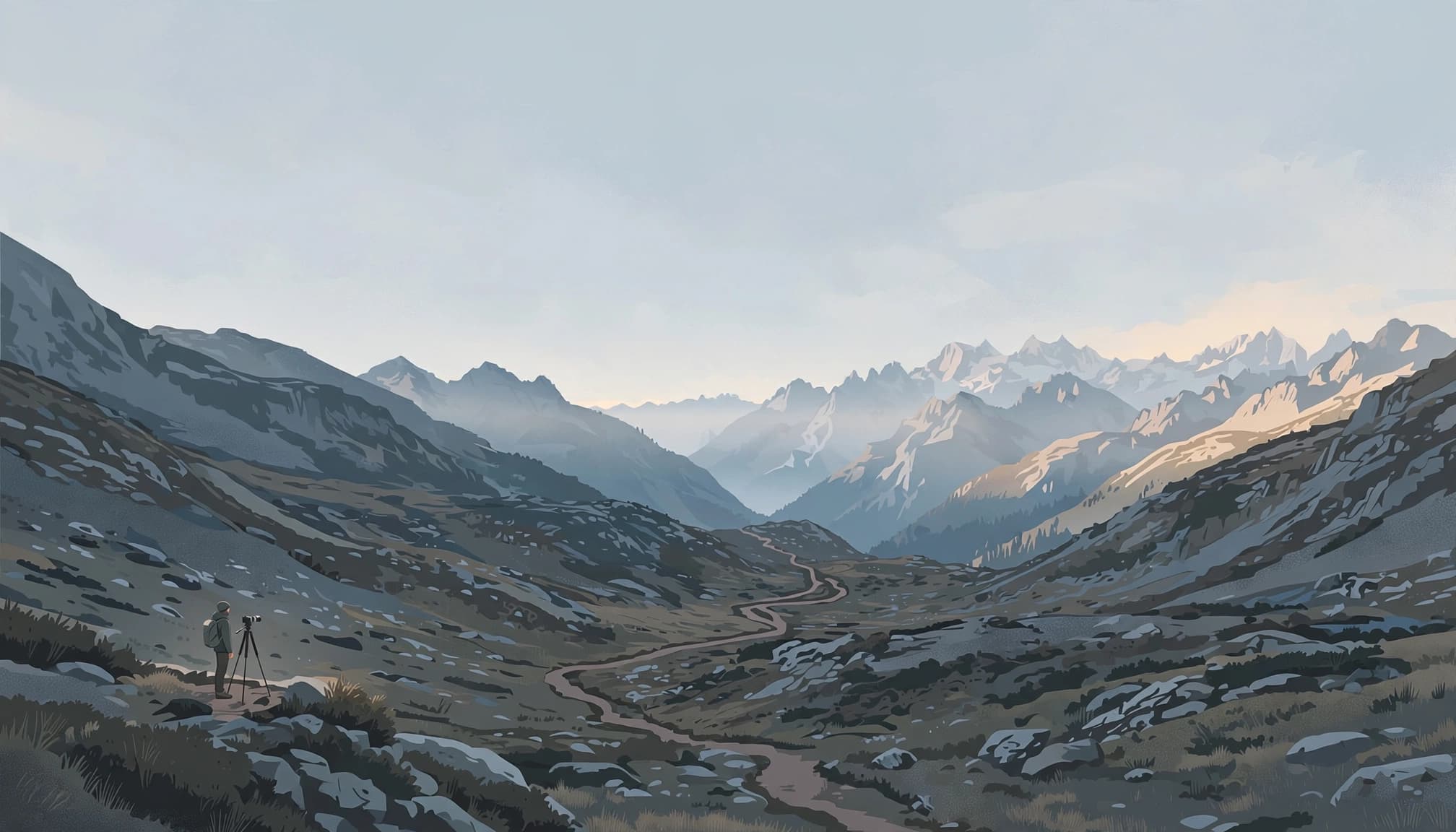
The Romantic Idea of a “Real” Landscape Photographer
Many photographers carry around a version of what a “real” landscape photographer looks like.
They carry serious camera gear and travel the world for outdoor photography. They photograph mountains and lakes, chase perfect light, and spend endless hours outdoors with Mother Nature as their backdrop. They don’t give a shit about money, marketing, or business strategy.
It sounds nice. It also keeps a lot of photographers broke.
Art First, Business Never
The fantasy says a real photographer should protect their artistic vision, not care about the commercial side. So marketing feels dirty. Selling feels beneath you. Building an audience feels like a distraction from the real work.
Then the same photographer gets frustrated because nobody buys their prints. Or because clients are hard to find.
That contradiction creates unmet expectations:
- “I’m in it for the love of photography.” Fine, but love alone doesn’t create sales.
- “I don’t care about the commercial side.” Then don’t expect commercial results.
- “Money shouldn’t matter to a real artist.” Money matters when you want photography to pay you.
Romanticizing photography is often a way to avoid the work you don’t want to do. Marketing. Sales. Strategy. Learning what people buy. It can also lead to burnout in landscape photography and creative burnout when the dream never matches reality.
Talent Doesn’t Automatically Create Income
There are talented photographers who never make a cent. Their problem isn’t always the quality of the images.
The problem is that they never learn how to turn their landscape photography skills and knowledge into something people can buy.
The photographers making the most money aren’t always the best or most award-winning photographers. They’re often the ones who understand how business works. They know how to get attention, build trust, and turn interest into customers.
Photographers who know business and marketing make the most money.
That doesn’t mean you need to become some loud online marketer. It means you need to stop pretending marketing doesn’t exist because you’d rather be out shooting.
A useful photography business overview from PicDrop makes the same basic point: good photography is only one part of the work. A business also needs a way to reach the people who might buy. Online courses can turn your knowledge into side income beyond individual image sales.
I Made the Same Mistake With Prints
I had years of marketing experience before I started selling landscape prints online. Then I did the least strategic thing possible.
I uploaded photo after photo and waited for print orders.
A framed print sold for around $400. An unframed print sold for about $300. On paper, that sounded decent. In reality, each order carried costs for printing, framing, shipping, camera gear, heavy camera bags, and my post-processing workflow. Shipping inside Norway alone cost roughly $20 to $30.
And that was before counting repeated field trips, hours outdoors, and Mother Nature’s refusal to produce a usable image every time. Selling through tourist towns or art fairs would have meant a different cost and distribution model, with travel, booth fees, and unsold inventory.
I sold a few prints. There was barely any profit left.
The lesson wasn’t that prints are bad. The lesson was that posting a product isn’t the same as having a sales system. Print sales can demand repeated effort without creating reliable income, which can lead to burnout in landscape photography. I eventually moved toward teaching Lightroom because I needed an offer that wasn’t tied to a fresh print order, framing time, and shipping every time someone bought.
The Business Work You Keep Avoiding
A photography business needs marketing, hustle, and a plan for how it survives. None of that disappears because you care about your craft.
You need to learn how your photography and knowledge can become something useful that people will pay for. That might mean prints sold online, in tourist towns, or through art fairs. It could also mean photography courses, photography workshops, guided trips, photo licensing, or client work.
Partnership-based work with tourism boards or brand deals requires different customers and offers than selling prints. These are different business models, with different messages.
Loving Mother Nature doesn’t define a viable customer segment. You may need several income sources, but each offer still needs a clear purpose.
Before you post another photo and hope it does something, get clear on a few things:
- What are you selling?
- Who is most likely to buy it?
- How will those people find you?
- How will you build enough trust for them to buy?
- How will you follow up with people who show interest?
You may need to keep a day job while you build demand, rather than expecting immediate full-time income. Unclear offers and constant unpaid effort can lead to burnout in landscape photography.
You can’t ignore the commercial side and expect commercial results.
Social Media Is Not the Whole Marketing Plan
People can’t buy from you if they don’t know you exist. That makes building an audience part of the job.
Social media can help with that. A personal website can help too. But posting photos on social media isn’t a complete marketing strategy.
Followers and likes don’t pay you. Attention isn’t a sale.
Posting Without a Plan Leaves You Invisible
A lot of photographers post new images on social media with no real strategy behind them. They’re surrounded by other photographers doing the exact same thing.
The result is predictable. They stay unseen in the crowd, hoping something will eventually happen.
I used to think online business would be simple: publish photos and wait for orders. That belief didn’t survive contact with reality. Without the right audience, a clear offer, and a way to follow up, attention doesn’t turn into reliable sales.
A stronger content plan can show your creative process, post-processing workflow, or how Mother Nature shapes a location. A repeatable content and follow-up system is more sustainable than constant posting. It can also reduce burnout in landscape photography.
500px’s guide to marketing photography also places posting alongside email, rather than treating it as the entire job.
People Need to Know, Like, and Trust You
Your audience has to know you exist. Then they need a reason to like what you do and trust you enough to buy.
That relationship doesn’t come from throwing another mountain photograph into a feed and disappearing.
Social media reach can be mediocre, which makes follow-up difficult. Email gives you a more direct way to stay connected with people who have already shown interest.
Social media can attract attention. Email marketing helps you build the connection that can turn followers into customers.
Your Audience Depends on What You Sell
Many photographers don’t understand their market because they haven’t separated their product from their peers.
If you sell prints, your buyer is different from someone buying a photography course. A workshop attracts a different person again.
| What you sell | The audience you need to understand |
|---|---|
| Landscape prints | People who want images to display or keep |
| Photography courses | People who want to learn photography |
| Photography workshops | People who want instruction and hands-on learning |
| Photo licensing | People who need photographs for a specific use, including stock photos |
The point is simple. You can’t assume one audience wants everything you make.
Other Photographers Aren’t Always Your Customers
If you sell landscape prints but spend all your time in a photography community where people discuss camera gear, you might be talking to peers instead of buyers.
How likely is it that another landscape photographer wants to buy your print for their wall?
That doesn’t mean photographers never buy prints. It means you can’t build your whole business around the assumption that people interested in landscape photography are also the people most likely to buy what you’re selling.
I saw a version of this with a Lightroom course. I had nearly 2,000 email subscribers and webinar attendees. I thought that would translate into sales.
It didn’t.
Many people on the list used free editing software or a cheaper Lightroom competitor. The offer was a poor fit for much of the audience. The course taught a paid post-processing workflow, but that wasn’t what many subscribers needed. Five people bought the $299 beta, and they gave very good feedback. But a list full of people who enjoy free photography education is not automatically a list of customers for a paid Lightroom program.
List size means nothing if the audience doesn’t fit the offer.
Learn How Money Moves Through Photography
Some photographers think staying ignorant about photo licensing, sales, marketing, and business proves they’re pure artists.
It’s not. Landscape photography, like any creative work, still needs a market.
A sale isn’t the end of the relationship. In my previous work in medical diagnostics, we didn’t hand a product to a distributor and hope for the best. We trained distributors, followed up, and supported what happened after the sale.
Then I entered online photography and somehow forgot that lesson.
Mother Nature can provide endless inspiration, but she won’t distribute your work. You need to build relationships with tourism boards, galleries, and art fairs through deliberate outreach.
You can’t treat distribution as “put the product in front of people and hope.” That isn’t a strategy. It’s wishful thinking.
Stop Waiting for a Magical Break
The fantasy is endless time in nature with no business pressure. The hope is that one day everything will work out without sustained effort.
Many people want to become a full-time landscape photographer without building the business that makes it possible.
But photography businesses don’t appear by accident.
The reality is less romantic. Time outdoors can mean early starts, long hikes, and heavy camera bags. Mother Nature offers the setting, but you still have to do the practical work.
Waiting for a breakthrough can also contribute to burnout in landscape photography. A realistic business model is more sustainable than hoping for one lucky break.
- You need marketing.
- You need an audience.
- You need customer connection.
- You need a strategy for what you sell and how people buy it.
None of this makes you less committed to photography. It means you’re taking responsibility for the financial viability of the business you want photography to create.
Stop Thinking Like a Dreamer
If you want to earn money as a landscape photographer, you need to break the cognitive dissonance.
Stop saying you’re above the capitalist demands of business while being angry that your work isn’t selling. Stop treating marketing as something beneath a real photographer. Stop using passion as an excuse to avoid learning what customers want.
You don’t need to give up photographing Mother Nature or the experiences you love. You may need to spend less time chasing remote views and more time building demand. A day job can support you while you build that demand. That’s not failure, and it can help prevent burnout in landscape photography when your business model isn’t realistic yet.
You do need to understand what sells, who buys it, how to reach those people, and how to build enough trust for them to pay you.
Frequently Asked Questions
Why do talented landscape photographers stay broke?
Talent improves the quality of your work, but it doesn’t automatically create customers or sales. Many photographers avoid marketing, audience research, and business planning while expecting their images to sell themselves.
Can landscape photographers make money without selling prints?
Yes. Photography courses, workshops, guided trips, photo licensing, client work, tourism partnerships, and brand deals can all create income. The right option depends on your skills, audience, and the problem your offer solves.
Are social media followers enough to build a photography business?
No. Followers and likes create attention, but attention isn’t the same as a sale. You also need a clear offer, an audience that fits it, and a way to build trust and follow up with interested people.
Should photographers only create the work they personally love?
You can photograph whatever you want as a personal creative activity. But if you expect a business to pay you, you also need to understand what customers want and be willing to create offers they value.
Do you need to quit your day job to become a full-time landscape photographer?
Not necessarily. Keeping a day job while you build demand can provide financial stability and reduce the pressure that contributes to burnout in landscape photography.
The Choice Is Yours
Being a photographer who ignores the business side is a fast route to staying broke.
The photographers who get paid aren’t always the ones with the best light, the most expensive camera gear, or the biggest awards. They’re the ones who learn the market, understand their audience, and build a sustainable career around landscape photography.
Drop the fantasy or stay broke. Stop thinking like a dreamer, and start thinking like a doer.